Procurement teams today are under tremendous pressure. They are expected to source faster, control costs better, minimize supplier risks, and maintain complete compliance — all while dealing with increasing business complexity. Yet, over 60% of procurement workflows in many organizations are still manual: paperwork, spreadsheets, back-and-forth emails, phone follow-ups, and disconnected systems.
This operational reality not only slows down procurement cycles — it increases costs, risks, and inefficiencies.
This is exactly why organizations are shifting from traditional, manual procurement tools to modern e-procurement software. But with dozens of options in the market, “choosing the right procurement software” becomes its own complicated project. Looking for a full overview? Read our complete guide to AI procurement software solutions.
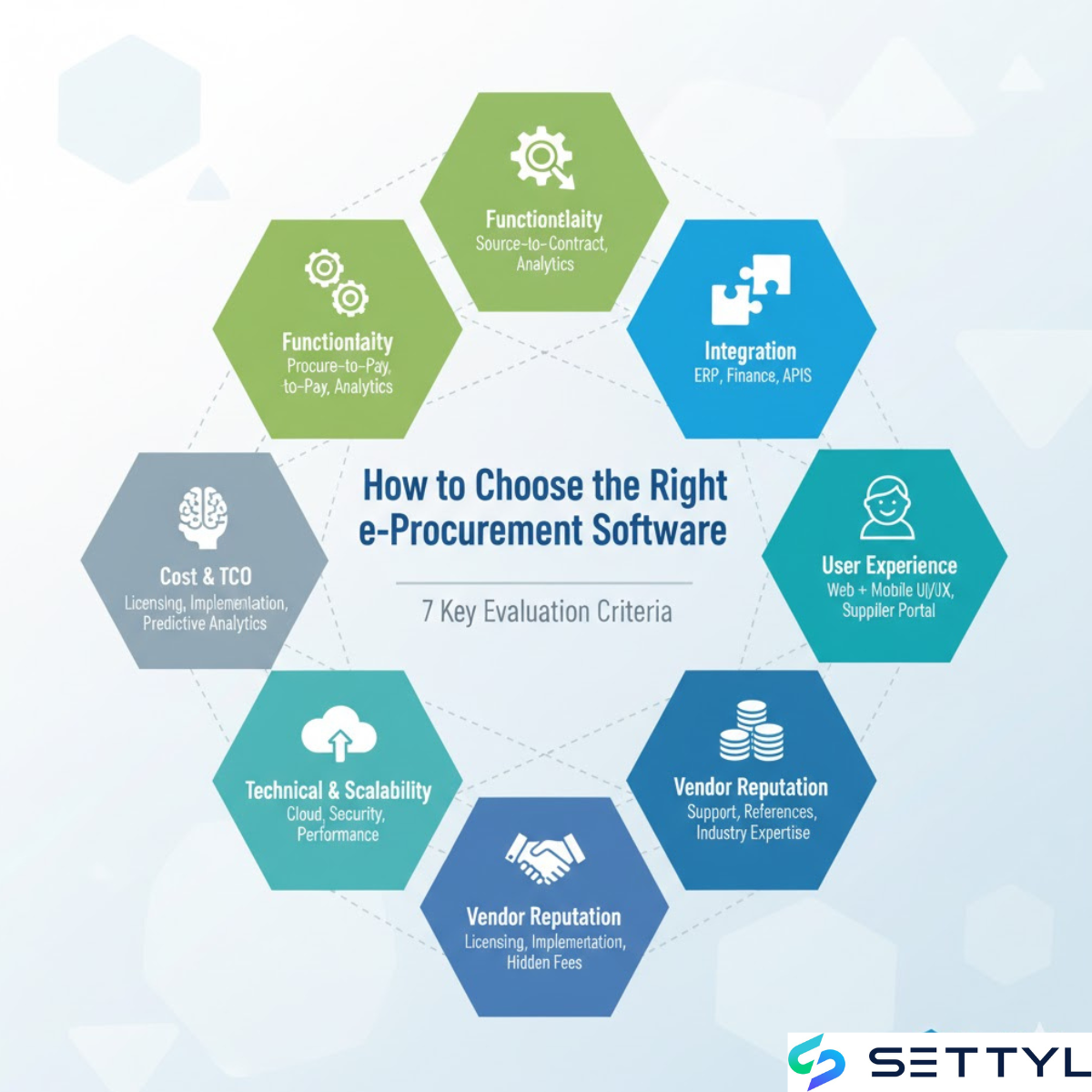
The good news? Evaluating and choosing the right e-procurement platform becomes simple once you know the 7 key criteria that matter most.
This guide breaks it down in a structured, practical way — so you can make a clear, confident, high-impact decision.
The first step in evaluating any e-procurement software is understanding what modules and features it offers — and whether it fits your procurement maturity.
A standard enterprise-grade procurement platform should cover:
Traditional procurement tools automate forms — but AI-driven platforms automate decision-making.
This is the biggest difference between yesterday’s e-procurement software and today’s new generation of AI-first platforms.
AI is no longer optional — it directly reduces manual effort, cycle time, and errors.
If your goal is 50–60% reduction in operational load, AI-powered procurement software is a must.
Integration is often the #1 hidden success factor in procurement software adoption.
Your platform must integrate seamlessly with systems such as:
Look for:
If your procurement platform cannot integrate well, you will simply shift the manual workload from procurement users to your IT team.
Procurement platforms historically had outdated, cluttered UI. Teams struggled to adopt them — leading to poor usage and failures.
Today, ease of use is a major decision-making factor.
Ask these questions:
A modern procurement platform should look and feel like a consumer-grade SaaS application.
A great user experience increases:
✔ Supplier adoption
✔ Employee adoption
✔ Speed of execution
✔ Compliance to procurement policies
Procurement is a collaborative function — with suppliers, finance teams, logistics teams, and internal users.
Your e-procurement software should support:
Strong vendor collaboration = stronger cost savings + lower risk.
Enterprises often overlook this — until it becomes a problem.
Your platform must support:
Minimum uptime expectation: 99.5%
Enterprise clients may require 99.9% with SLA guarantees.
If procurement is mission-critical for your business operations (and it is), reliability is non-negotiable.
Evaluating the product is only half the story — evaluating the vendor is equally important.
Procurement modernization is a multi-year journey. Choose a vendor committed to continuous improvement, innovation, and customer success.
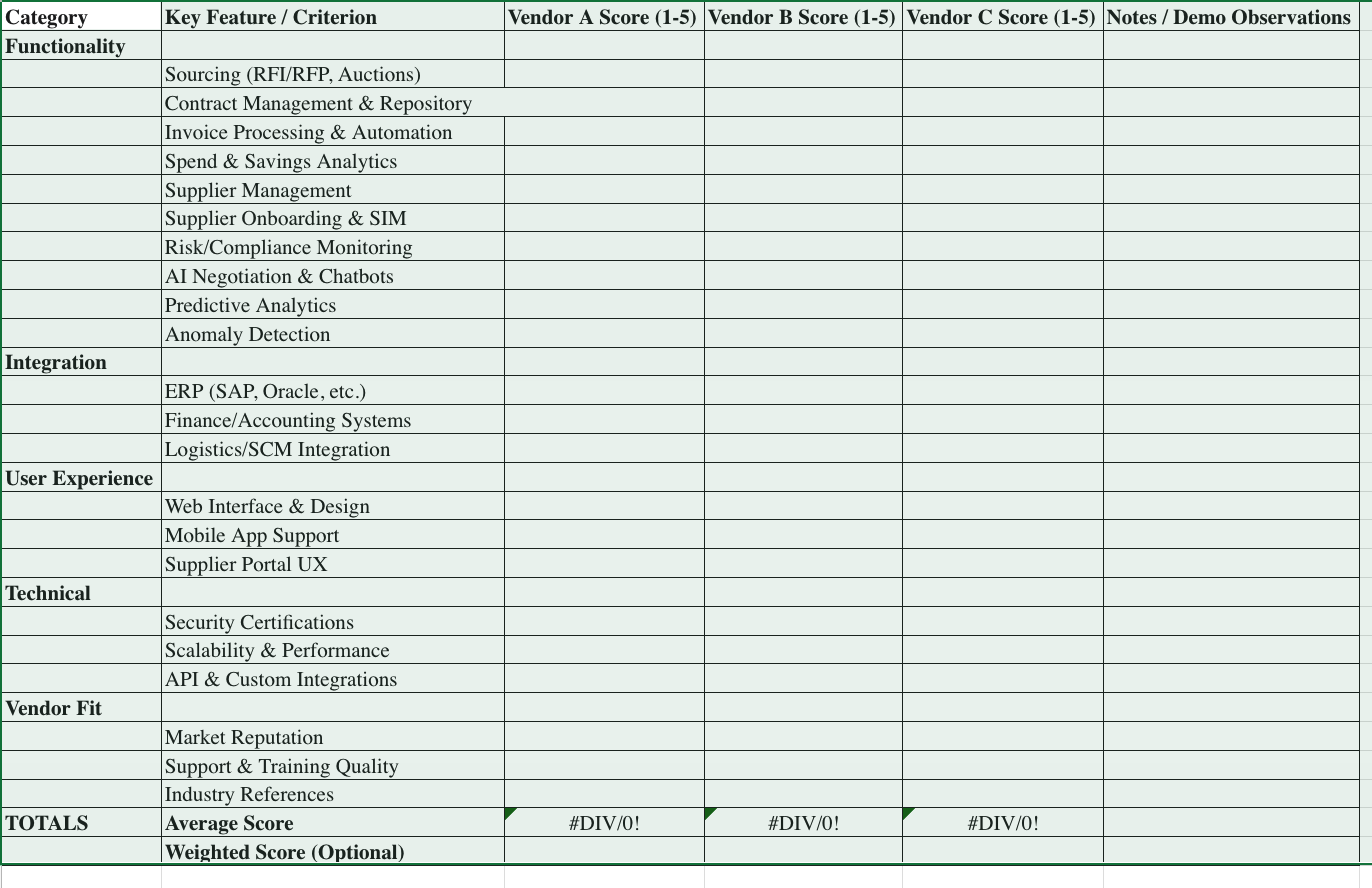
You can create your own or use the one from Settyl :
A complete checklist typically includes:
Choosing the right e-procurement software is a strategic decision — one that impacts cost savings, process efficiency, supplier performance, and compliance. With the right platform, organizations can dramatically cut manual effort, accelerate sourcing cycles, improve visibility, and drive better outcomes.
The 7 criteria above will help you evaluate and select a solution that fits your needs today and scales with you tomorrow.
If you want to explore an AI-powered procurement platform designed for modern enterprises, Settyl’s Lasya AI-based procurement suite is built exactly for that transformation.
Transform your business with Lasya AI —optimize, automate, and scale smarter today!