
Supply Chain Execution Blog
Research and guides on supply chain execution
Practical articles on Operational Fragmentation, Multi-Enterprise Execution, Autonomous Supply Chain Execution, Operational Memory and the System of Execution for supply chains.
System of Execution
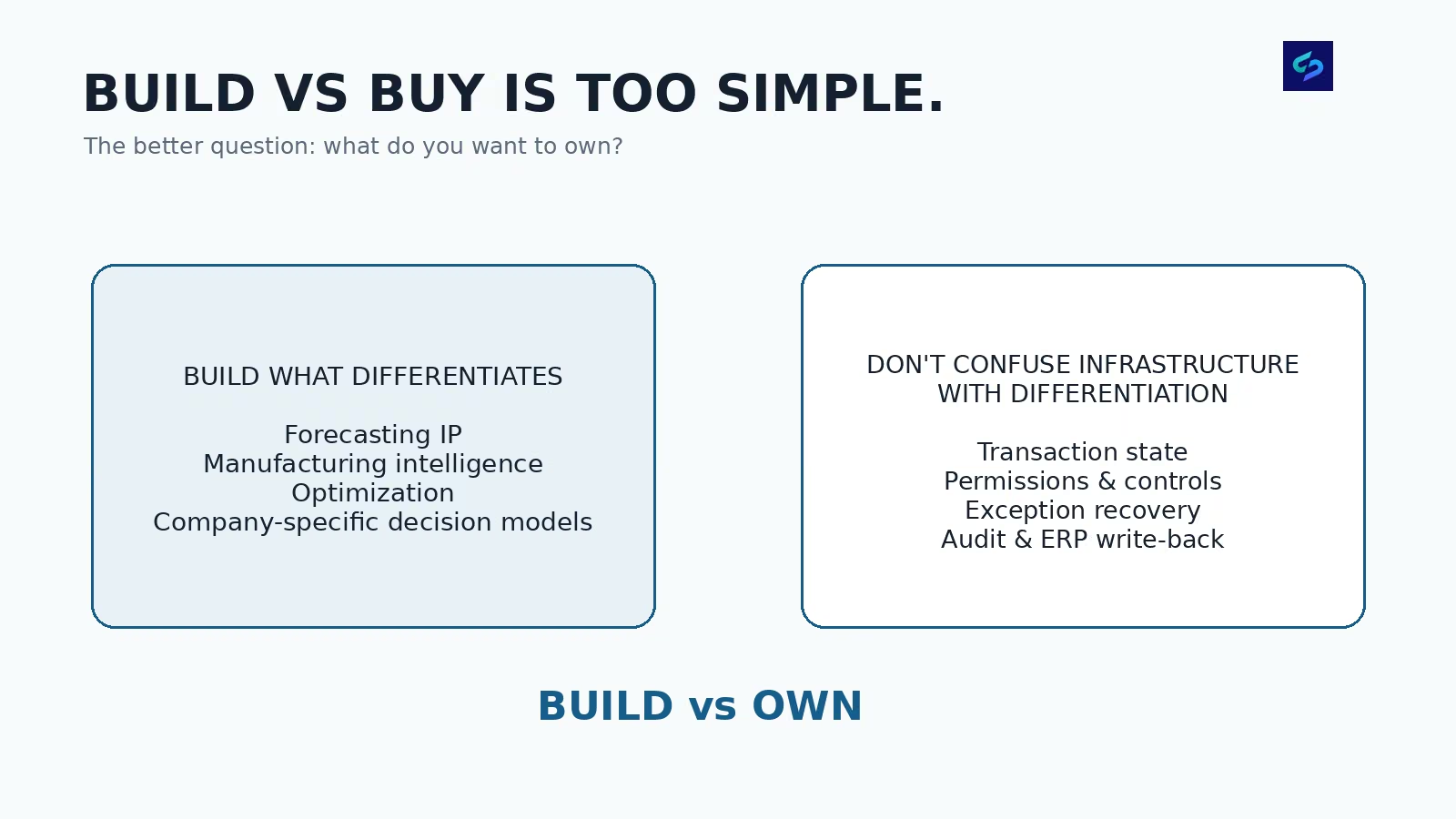
Build vs Buy Is the Wrong AI Question for Manufacturing. Build vs Own Is Better.
The strategic AI question is not simply whether manufacturers can build software internally. It is which intelligence creates differentiation and which execution infrastructure they want to own permanently.

System of Execution
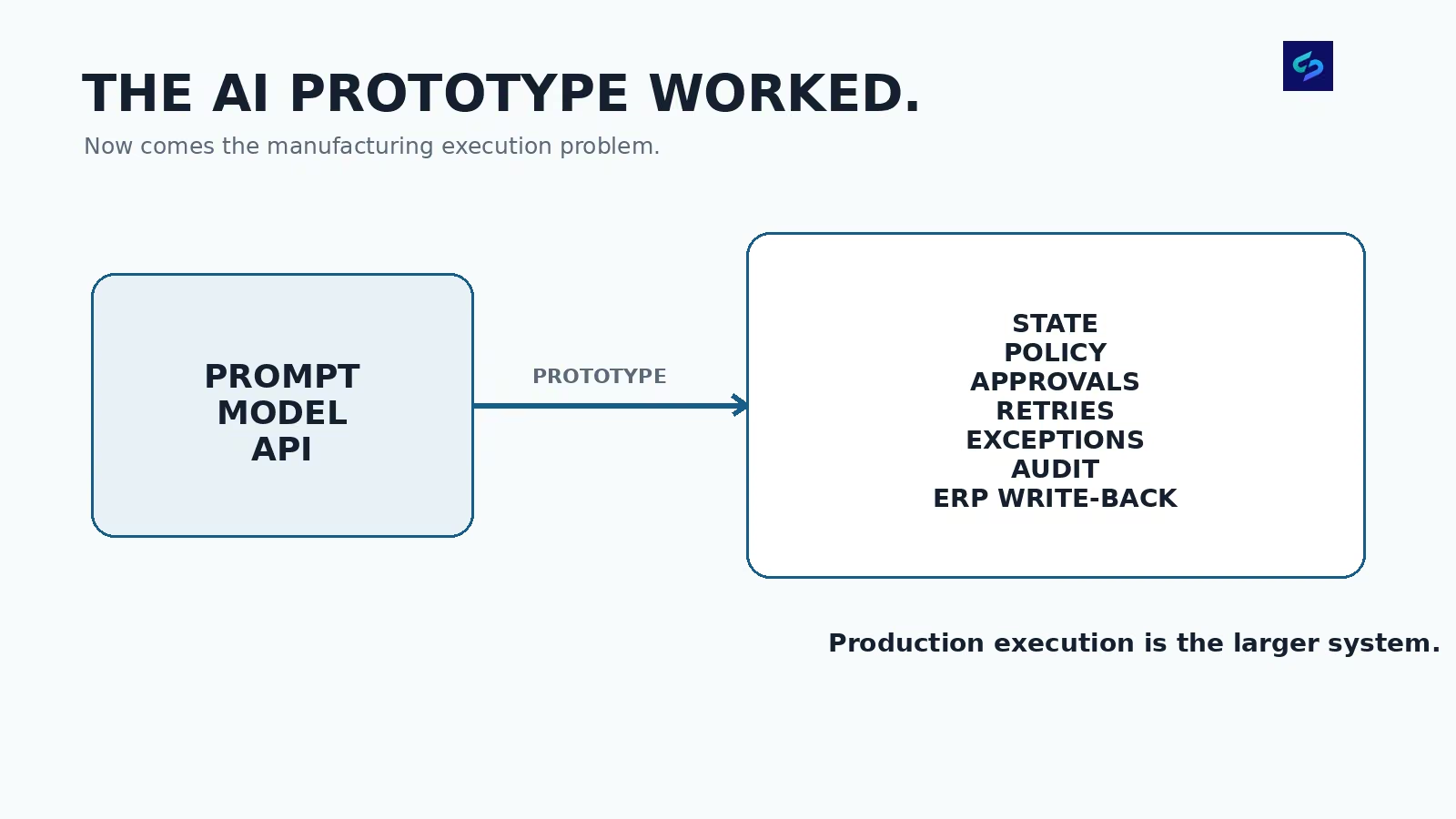
The AI Prototype Worked. Now Comes the Manufacturing Execution Problem.
A prompt, model and API can prove an AI concept quickly. Production manufacturing execution adds transaction state, policy, exceptions, approvals, auditability, retries and verified ERP outcomes.
System of Execution
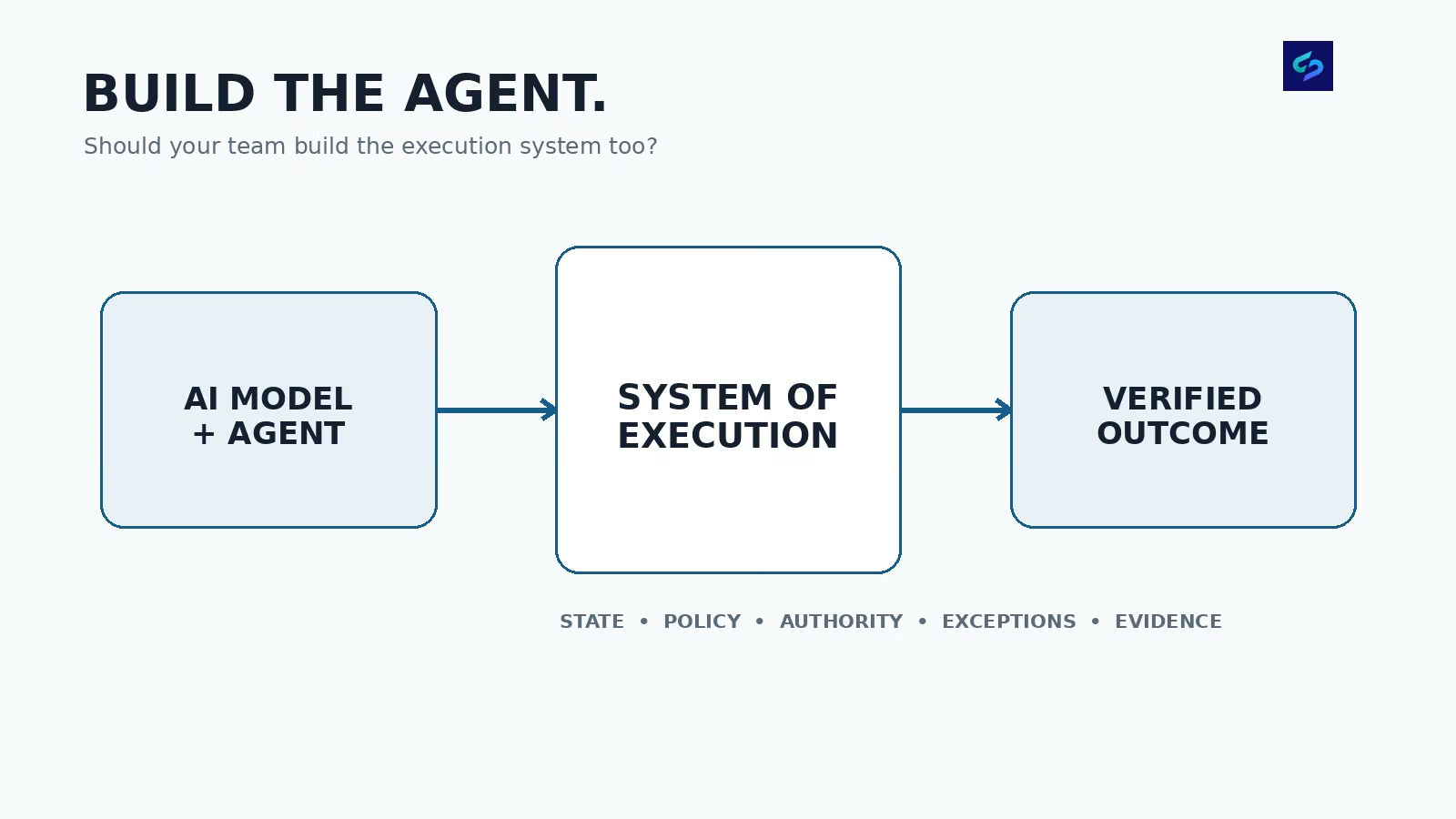
Your Manufacturing Team Can Build an AI Agent. Should It Build the Execution System Too?
Manufacturers can build useful AI agents quickly. The harder question is whether they also want to own transaction state, controls, exceptions, partner coordination, auditability and ERP write-back for years.
System of Execution
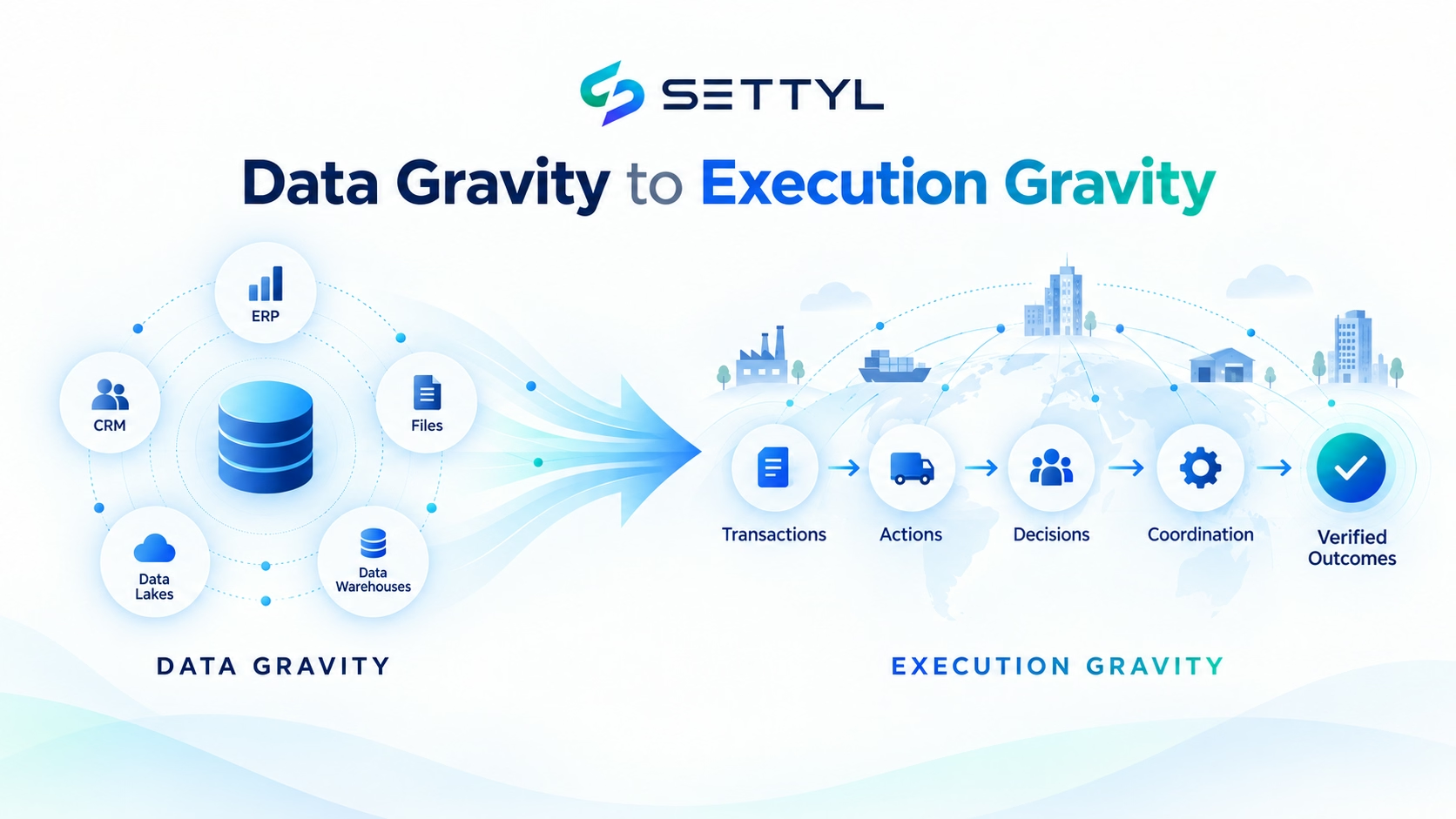
Data Gravity Built the Last Enterprise Stack. Execution Gravity May Build the Next One.
Data gravity made Systems of Record strategically important. AI may create a second center of gravity around execution: carrying transactions across enterprises, systems and channels until the intended outcome is verified.

Multi-Enterprise Execution
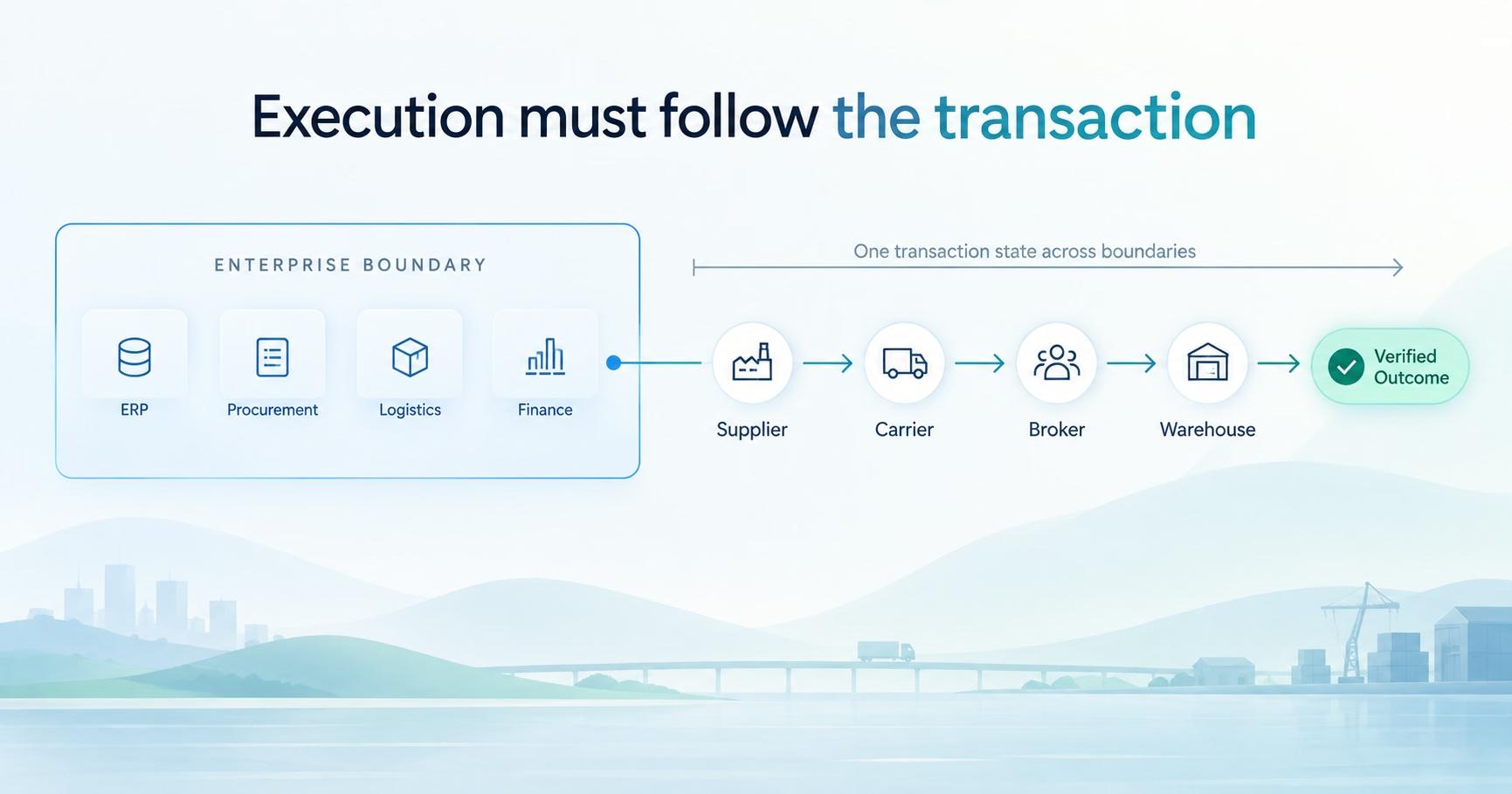
The Enterprise Boundary Is the Wrong Boundary for Supply-Chain AI
Enterprise AI can automate work inside one company while transactions still fail across suppliers, carriers, forwarders and brokers. The correct execution boundary is the governed transaction—not the enterprise.
Multi-Enterprise Execution
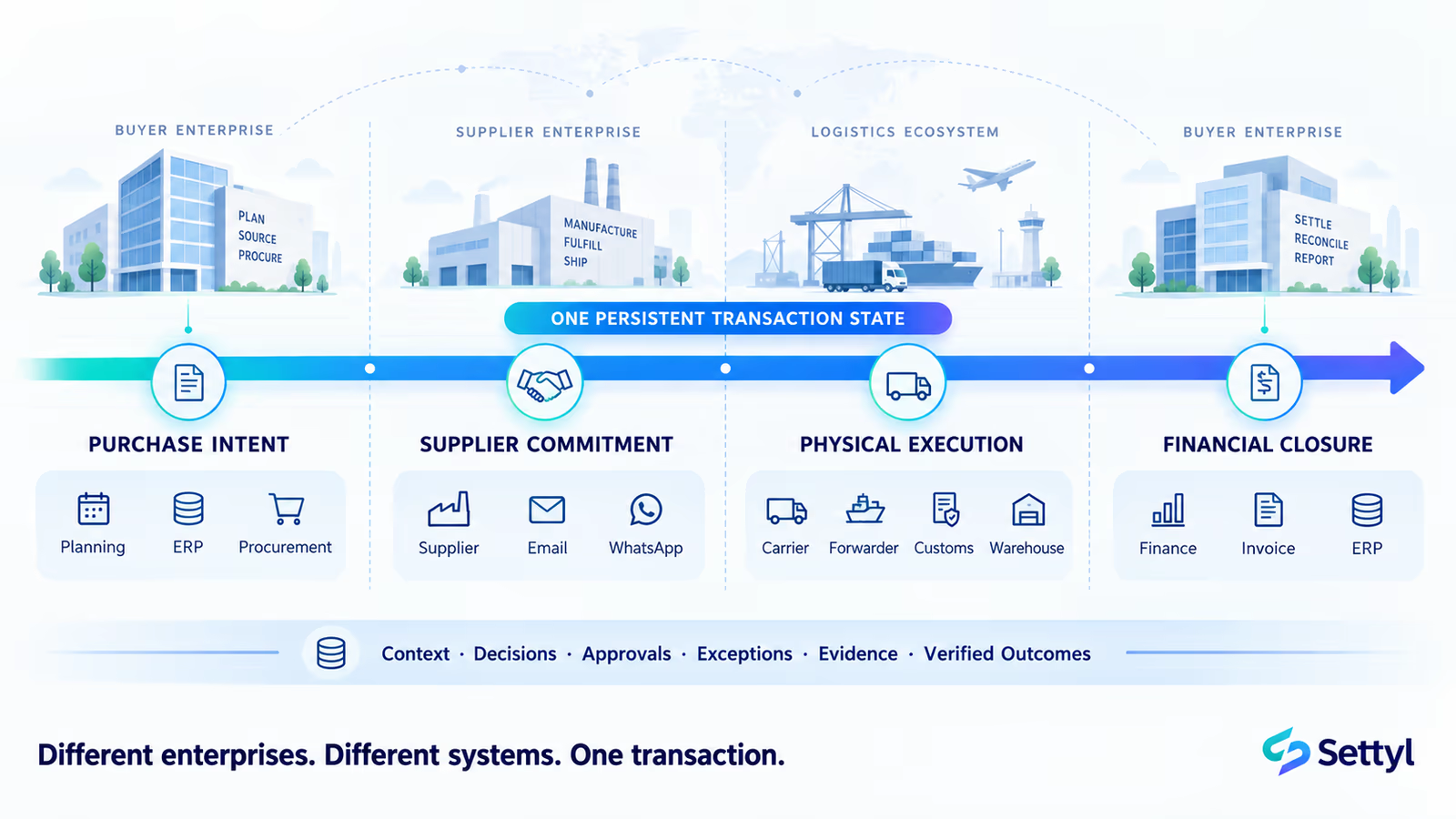
Multi-Enterprise Transaction Execution: From Purchase Intent to Financial Closure
A practical guide to carrying one supply-chain transaction across suppliers, procurement, logistics, EXIM, finance and ERP—from purchase intent to verified financial closure.
System of Execution
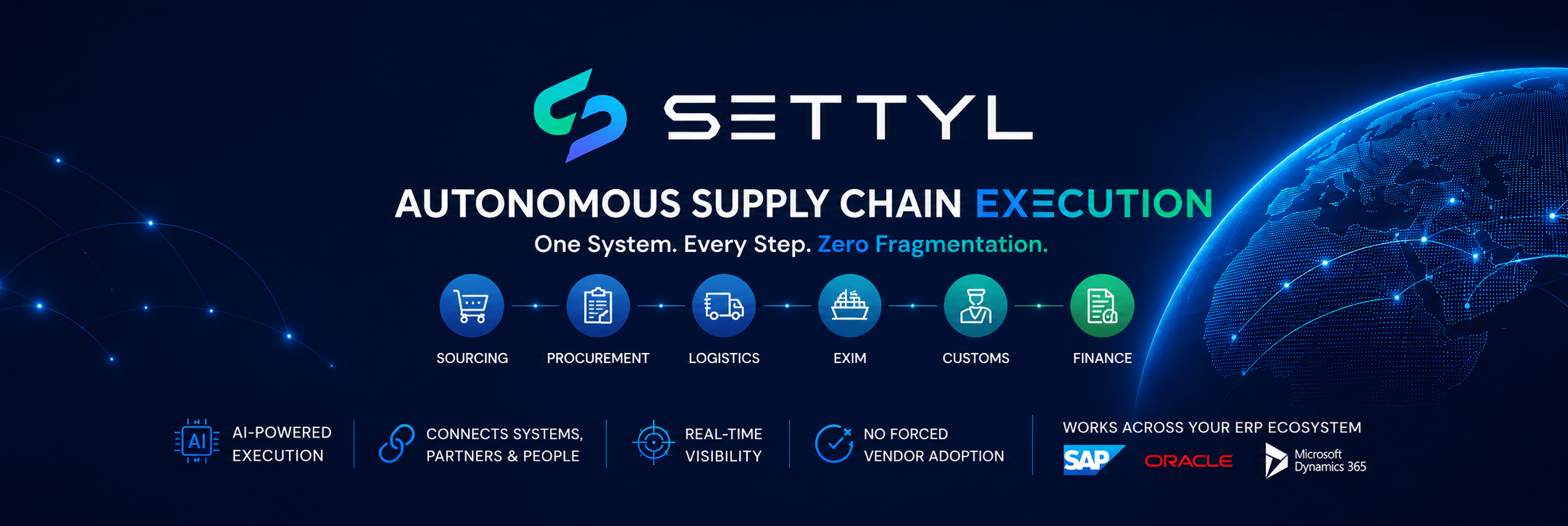
Operational Memory in Supply Chains: Why Verified Execution Beats Chat History
Operational memory is not conversation history. It is governed execution evidence—signals, decisions, actions, approvals, partner commitments and verified outcomes—reused to improve future supply-chain execution.
Autonomous Freight & Logistics
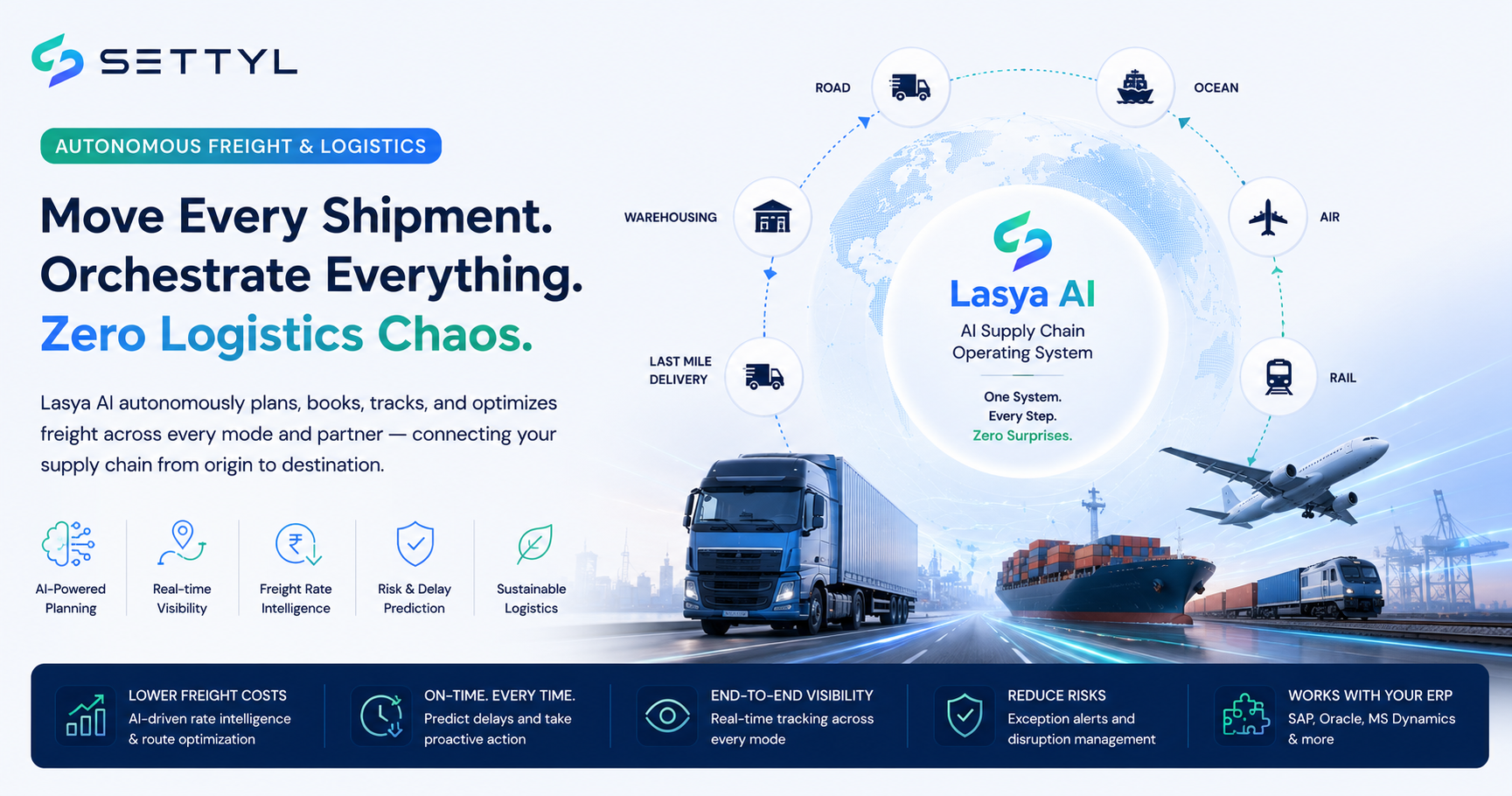
Freight Booking Is Not Logistics Execution: From Carrier Confirmation to Verified Delivery
A carrier booking confirms capacity, not the business outcome. Learn why logistics execution must carry readiness, pickup, movement, exceptions, delivery evidence and settlement to verified completion.
Autonomous Freight & Logistics
Customs Exception Management: From Document Mismatch to Verified Release
Customs exceptions are not document-processing tasks. They are multi-enterprise execution problems spanning shippers, forwarders, brokers, authorities, finance and ERP until release is verified.
Autonomous Finance Operations
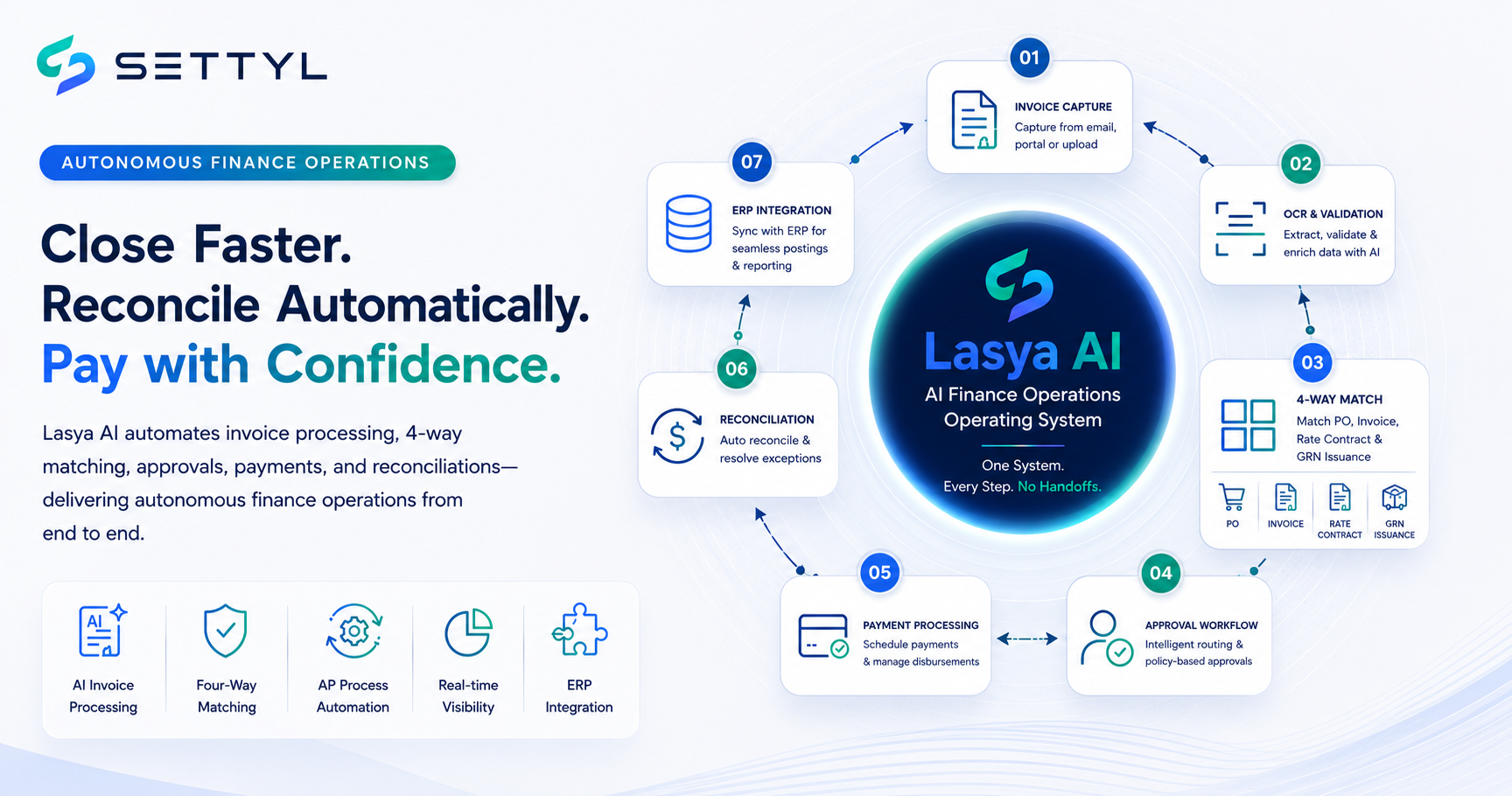
Autonomous Accounts Payable: From Invoice Intake to Verified ERP Posting
Autonomous accounts payable is more than OCR and matching. It carries an invoice through transaction resolution, evidence validation, exception handling, approvals, ERP posting and verified financial closure.
Autonomous Finance Operations
Freight Invoice Audit: Why Logistics Evidence Must Travel Into Finance
Freight invoices cannot be validated from rate cards alone. Learn why delivery evidence, route changes, detention events, approvals and shipment history must travel with the transaction into finance.
Autonomous Finance Operations
Invoice Matching Is Not Financial Closure: Why Finance Needs Execution Context
Invoice matching can validate a record, but financial closure depends on the execution evidence behind the transaction. See why finance needs one transaction context across procurement, logistics, delivery, exceptions and ERP posting.

Autonomous Sourcing & Procurement
Supplier Relationship Management in the AI Era: From Portals to Execution
Supplier relationships are expressed through transactions, not portals. Learn how AI enables supplier execution across enterprise boundaries.

Multi-Enterprise Execution
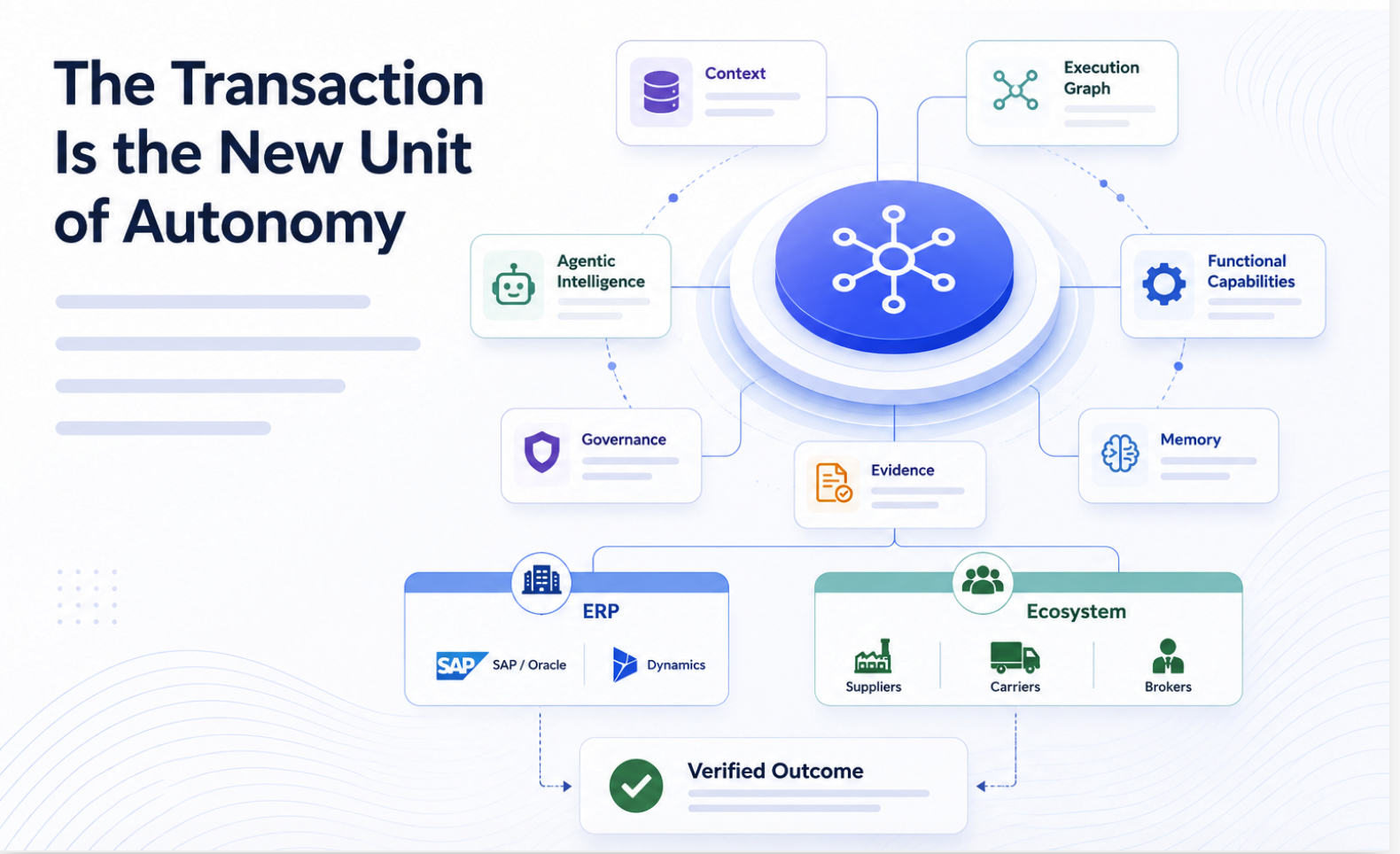
Autonomous Supply Chain Execution: Why Agentic AI Alone Isn't Enough
Why autonomous applications do not create an autonomous supply chain. The transaction—not the application—is the unit of autonomy, and a System of Execution must carry it across systems, enterprises, partners, and channels.
Operational Fragmentation
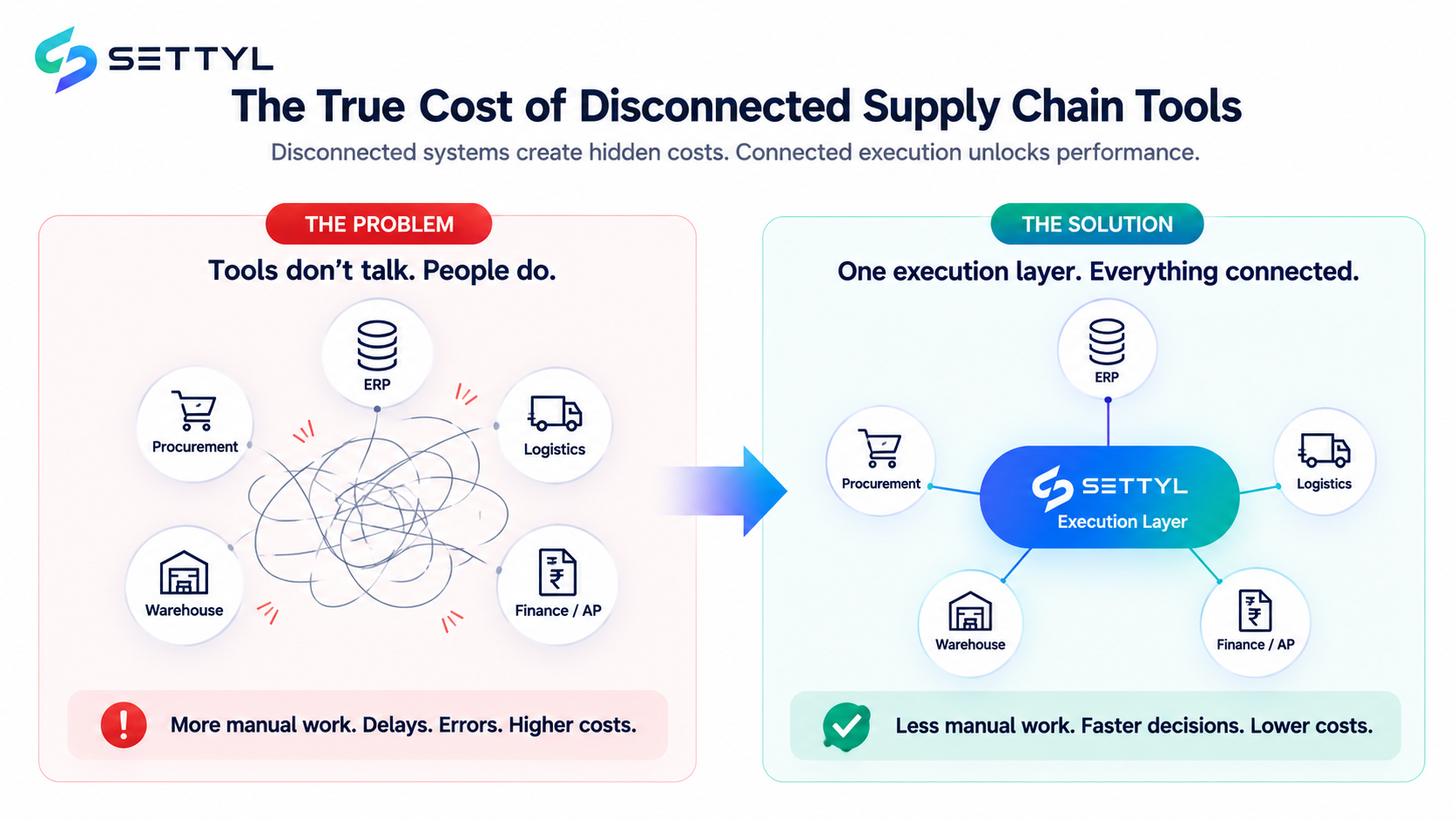
The True Cost of Disconnected Supply Chain Tools
Disconnected supply-chain tools create a cost that software budgets miss: the Execution Fragmentation Tax™. Learn how manual coordination across systems and enterprises consumes capacity—and how to measure it.
System of Execution
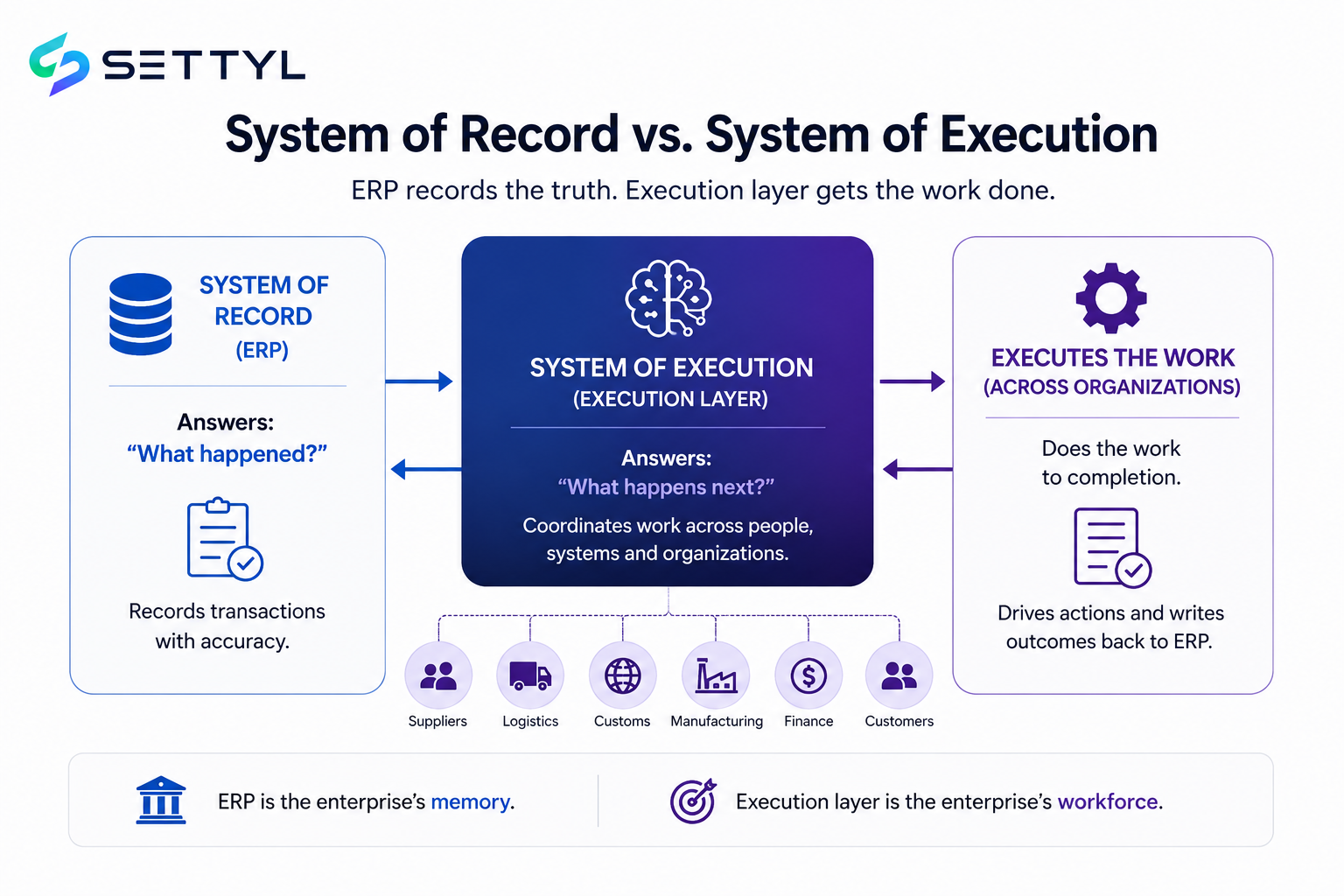
System of Record vs. System of Execution in Supply Chain
ERP is indispensable—but recording a transaction is not the same as carrying it to completion. Learn the architectural boundary between a System of Record and a System of Execution.
Operational Fragmentation
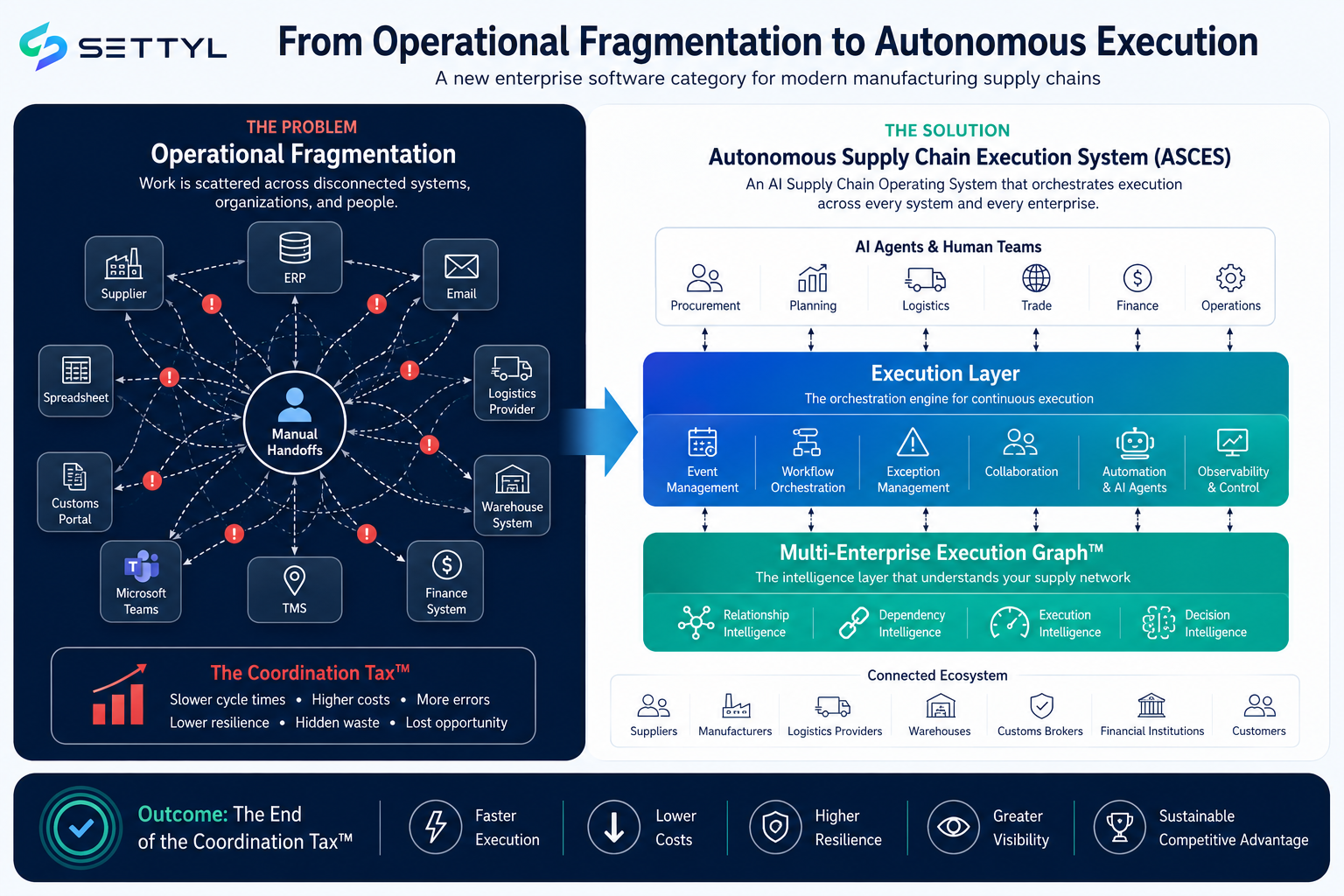
Operational Fragmentation Cost: 7 Signs Your Supply Chain Is Paying the Coordination Tax
Diagnose the Execution Fragmentation Tax: seven signs that manual handoffs across systems, teams and partners are consuming capacity, creating delay and increasing operating cost.
Autonomous Sourcing & Procurement
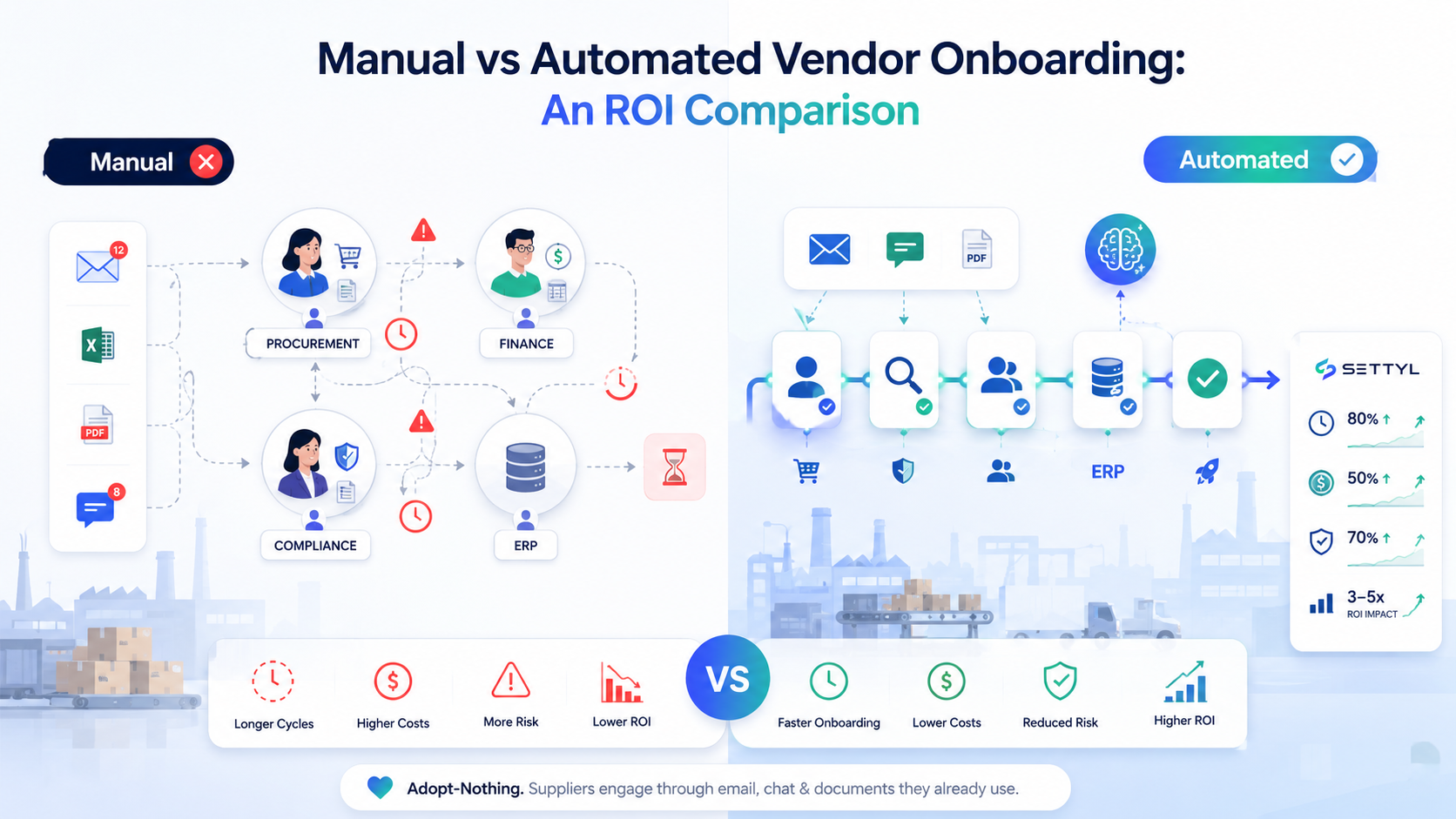
Vendor Onboarding Automation ROI: Manual vs Automated Cost Comparison
Build a defensible vendor onboarding automation business case using processing hours, cycle time, cost per supplier, payback period and delay value.
Autonomous Freight & Logistics
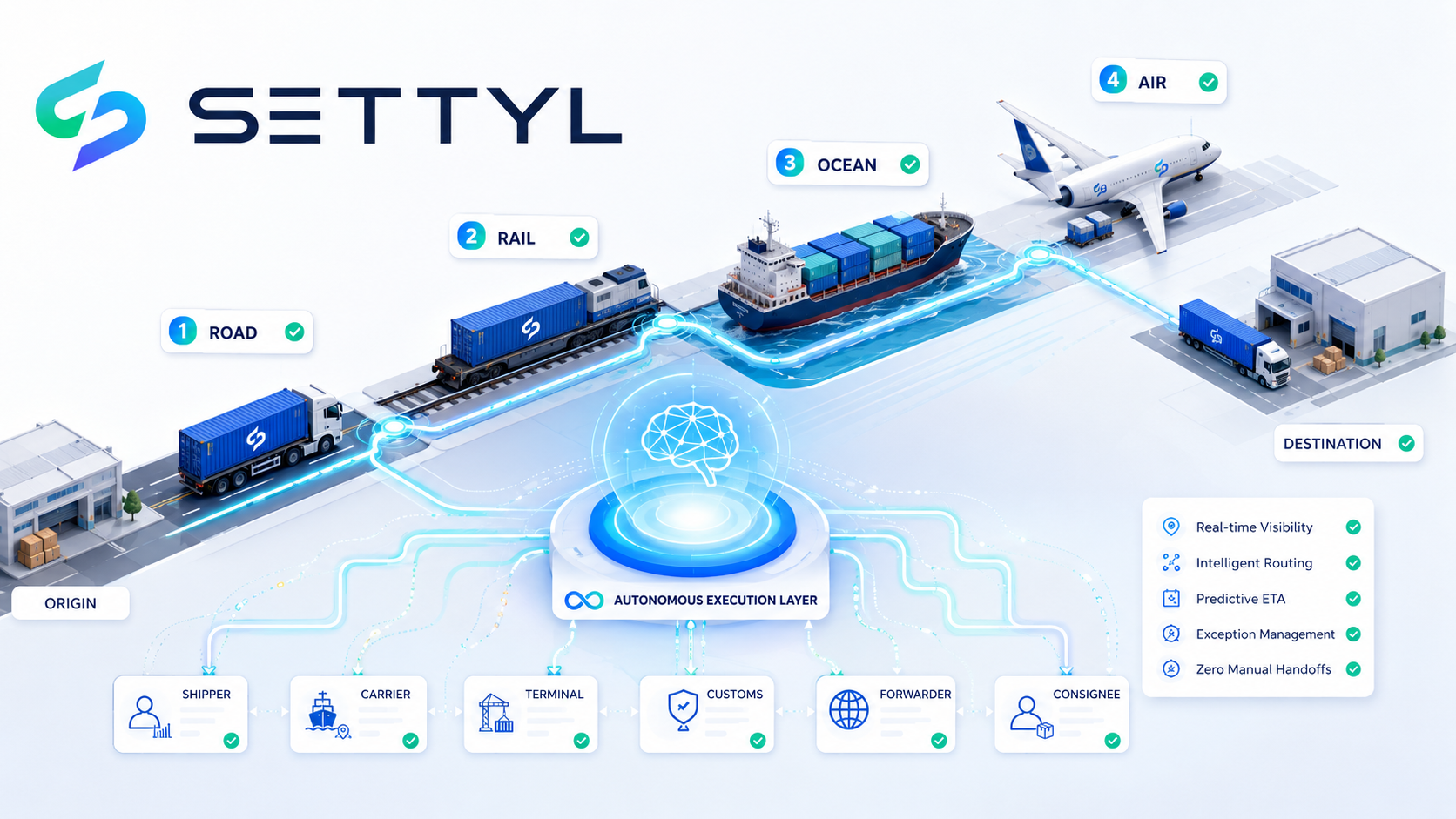
Autonomous Multimodal Logistics: AI Coordination Across Sea, Air & Road
Multimodal logistics breaks at cross-mode and cross-enterprise handoffs. See how a System of Execution carries one shipment transaction across carriers, customs, systems and channels.
Autonomous Freight & Logistics
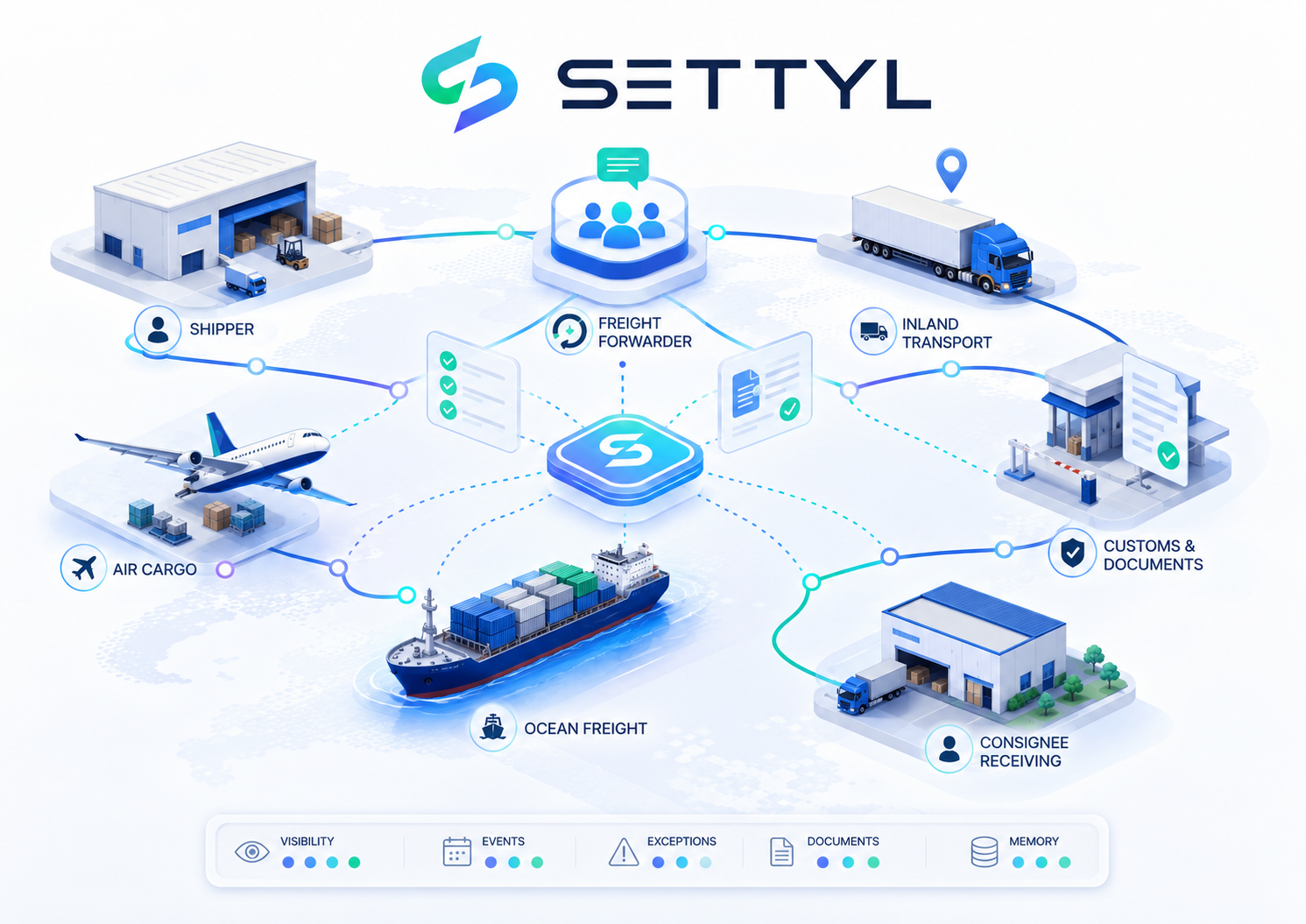
Logistics Chain Management: Key Functions & Multi-Enterprise Execution
Logistics chain management breaks at the handoffs between carriers, forwarders, customs, finance and ERP. See how a System of Execution carries one logistics transaction from requirement to verified outcome.
Autonomous Sourcing & Procurement
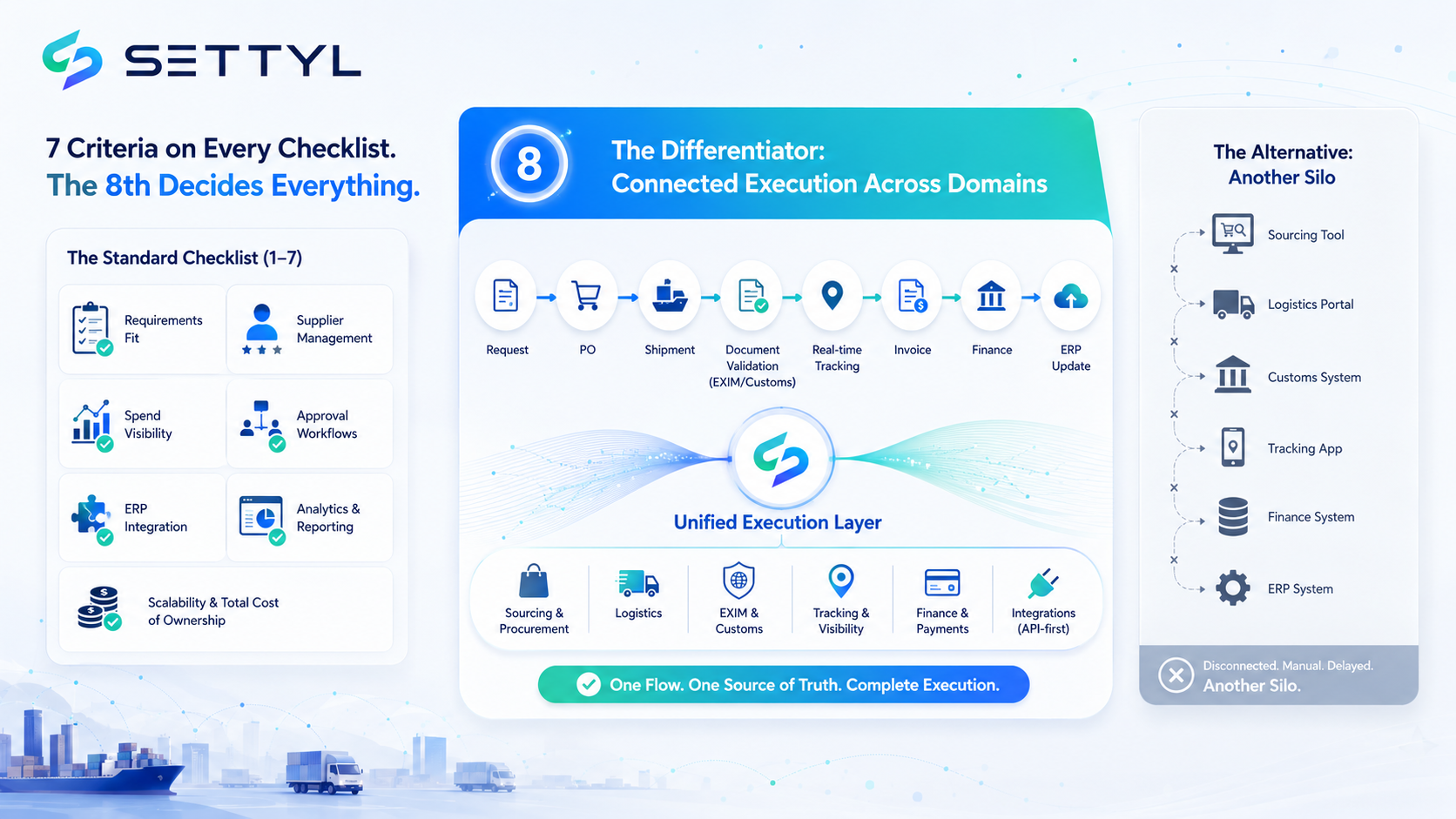
How to Choose E-Procurement Software: 8 Key Criteria for Deciding
Learn how to choose e-procurement software using 8 key criteria—and why cross-domain execution matters more than another procurement feature list.
Autonomous Sourcing & Procurement
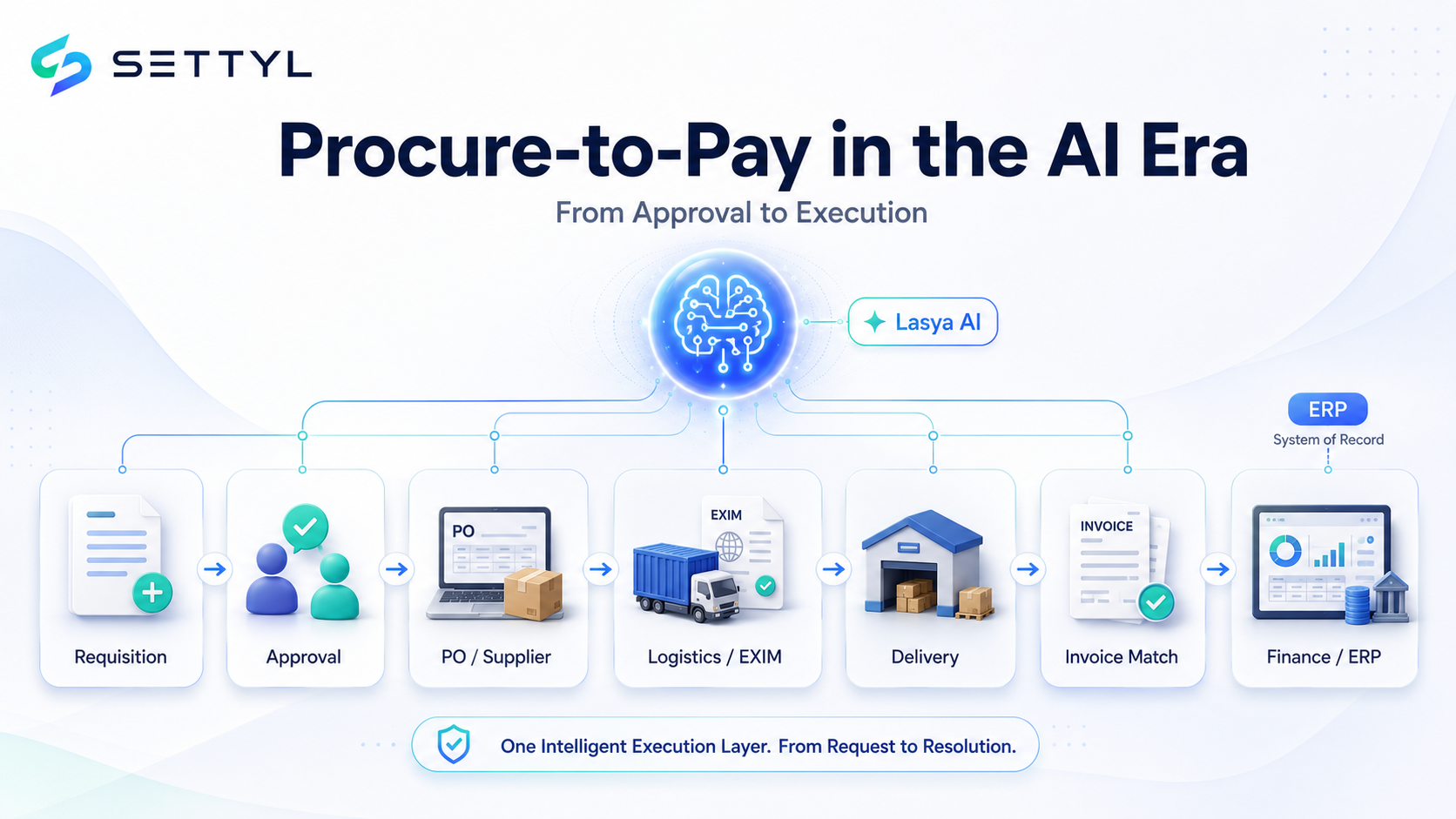
Procure-to-Pay in the AI Era: From Approval to Execution
Procure-to-pay has 12 steps and 7 handoffs. See how an AI execution layer replaces the human relay across procurement, logistics, finance and ERP.

System of Execution
Supply Chain Trends 2026: The Shift From Visibility to Execution Memory
The defining 2026 supply-chain shift is from visibility and isolated AI toward transaction execution across enterprises, with ERP as System of Record and a System of Execution running the work.

Autonomous Supply Chain Execution
AI Agents in Supply Chain: End-to-End Autonomous Execution
AI agents are specialized workers—not the transaction owner. See how a System of Execution coordinates agents, systems and partners from intent to verified supply-chain outcome.
Autonomous Sourcing & Procurement
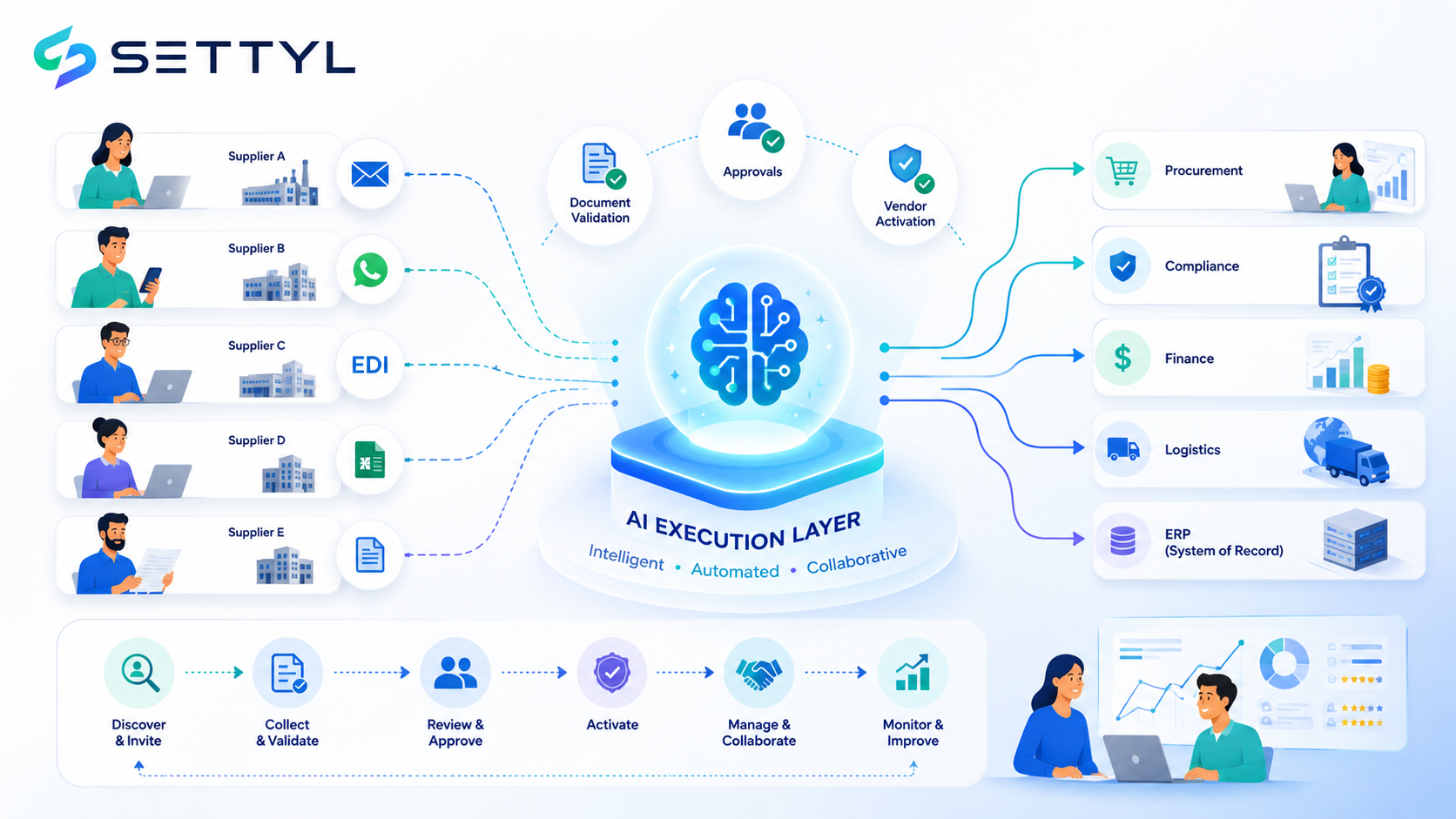
Supplier Onboarding & Management: How to Run It Without Forcing New Software
Traditional supplier onboarding forces vendors onto your portal. The adopt-nothing model meets suppliers on email, WhatsApp and EDI — and onboards in hours, not weeks.
Operational Fragmentation
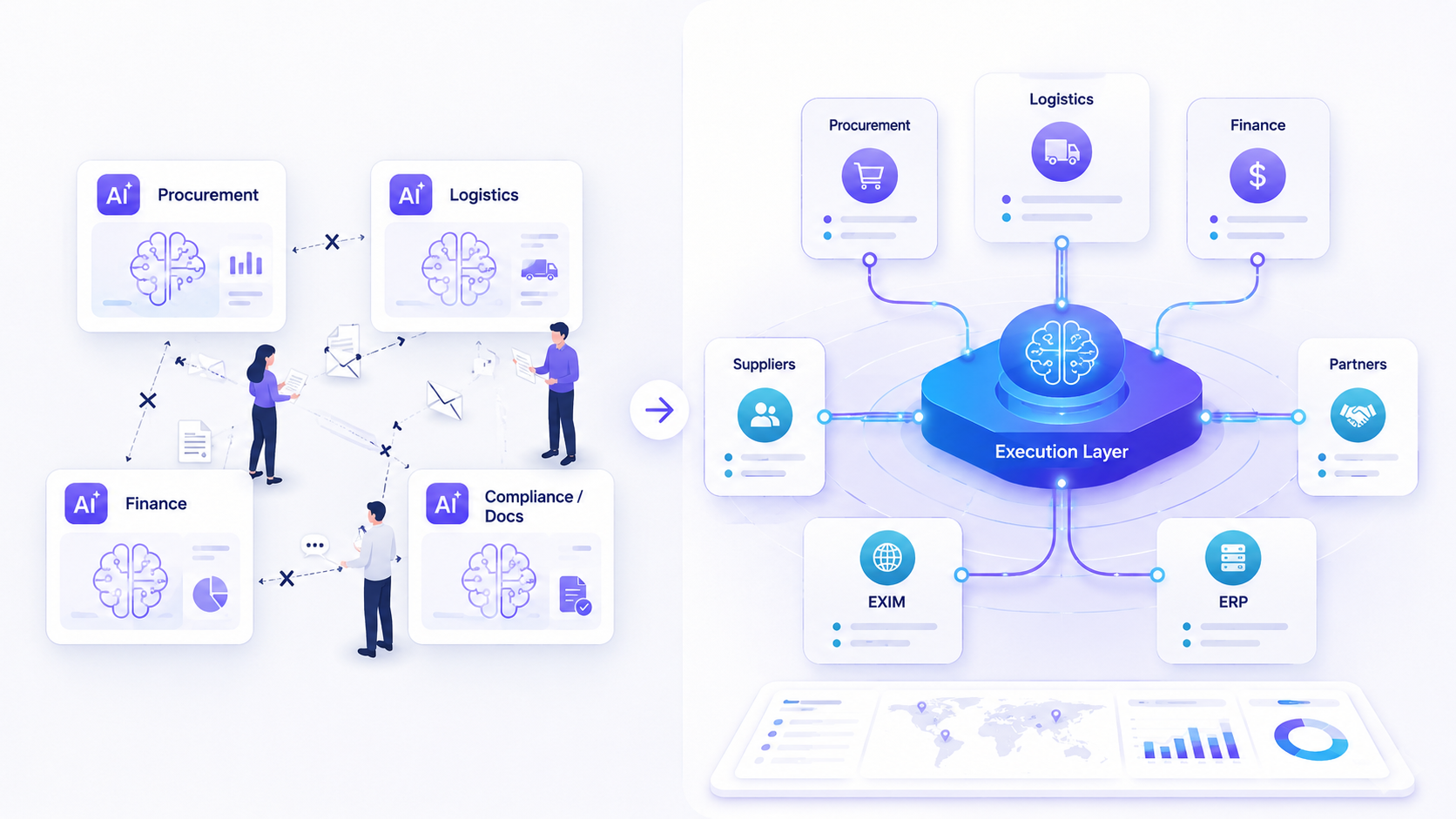
Why AI in One Function Won’t Fix Your Supply Chain
Point AI can improve procurement, logistics, or finance, but the transaction still crosses functions and enterprises. Learn why supply chains need a System of Execution.
Multi-Enterprise Execution
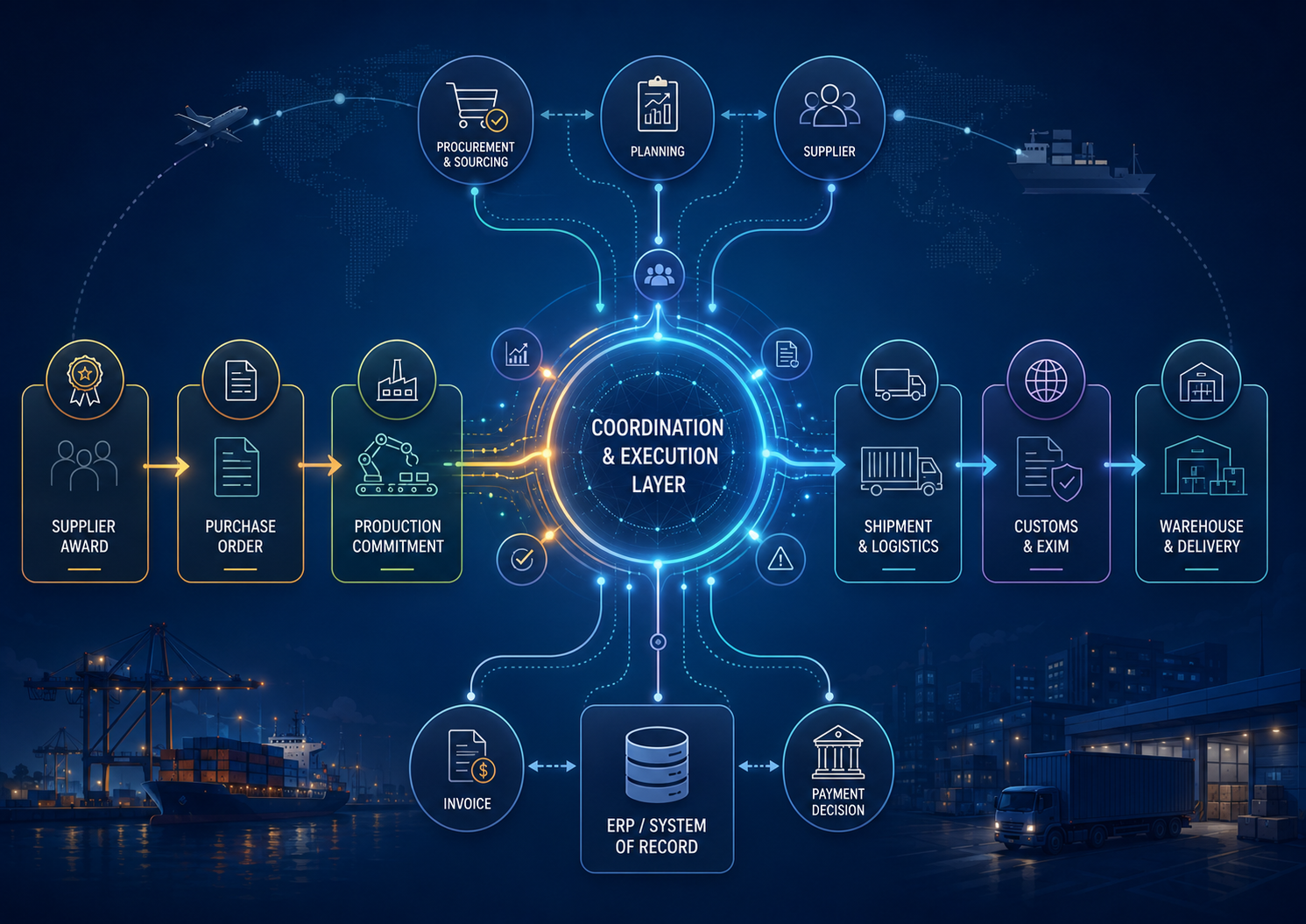
Why Coordination Is the Hidden Engine of Supply Chain Success
The real engine of supply chain performance isn't any single function — it's coordination between them. Why cross-domain execution decides who wins.

Autonomous Sourcing & Procurement
AI Procurement Software: Where a 60% Reduction in Manual Effort Can Come From
Learn what AI procurement software can automate, where manual effort is removed, and why a System of Execution must carry procurement transactions across suppliers, logistics, finance and ERP.

Autonomous Supply Chain Execution
Beyond RPA: Why AI Agents Outperform Co-Pilots in Supply Chain
RPA repeats tasks and copilots recommend actions. The next step is not another autonomous agent—it is a System of Execution that owns the transaction to verified outcome.
System of Execution
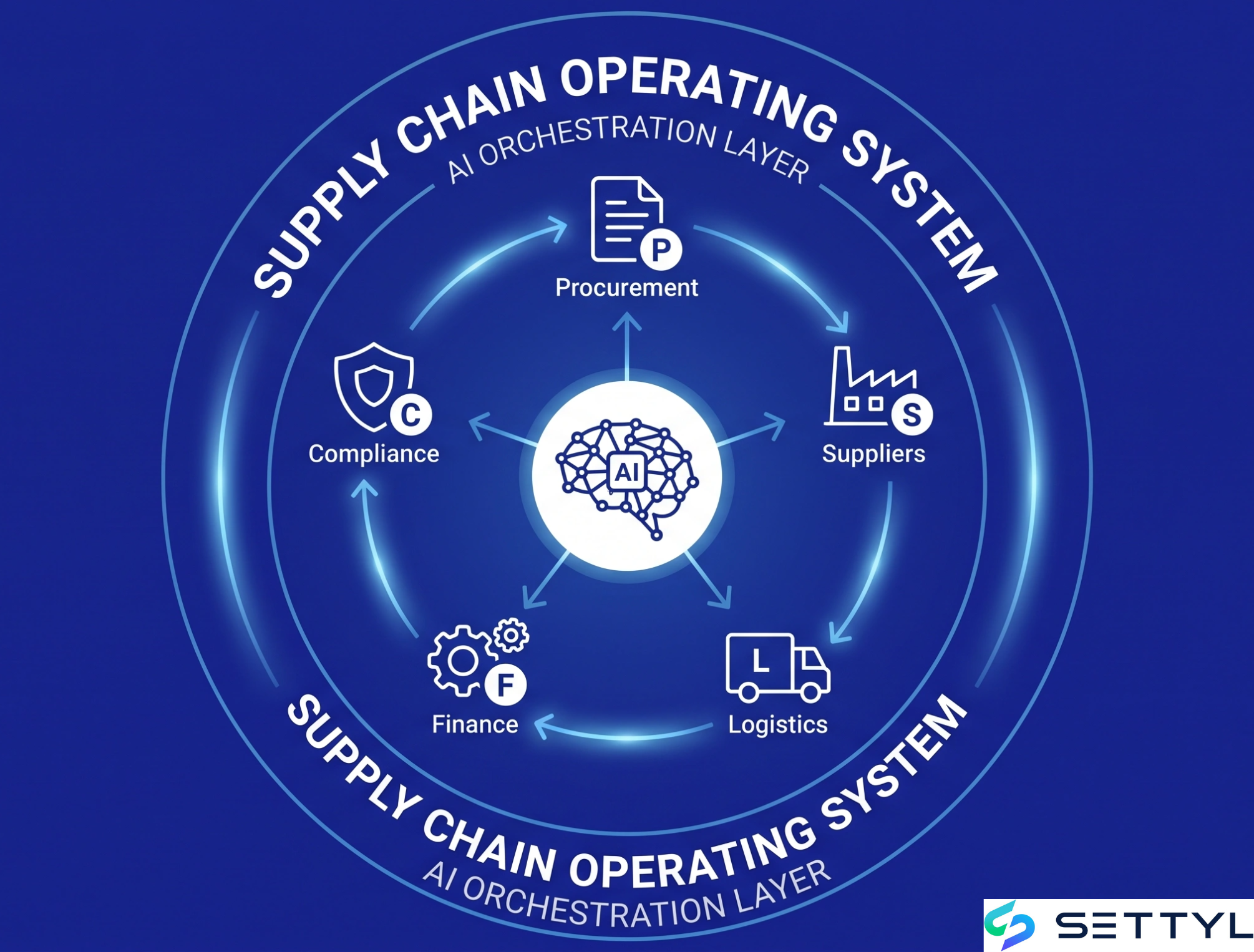
System of Execution for Supply Chains: Architecture, Components & How It Works
A technical guide to the System of Execution architecture: persistent transaction state, governed agents, multi-enterprise orchestration, operational memory, ERP coexistence and verified outcomes.