
The transaction runs itself.
Autonomous Supply Chain Execution is the outcome when transactions sense state, decide the next action, execute across systems and partners, recover within policy, and complete with a verified business outcome. ERP records the outcome. The execution layer gets it there.
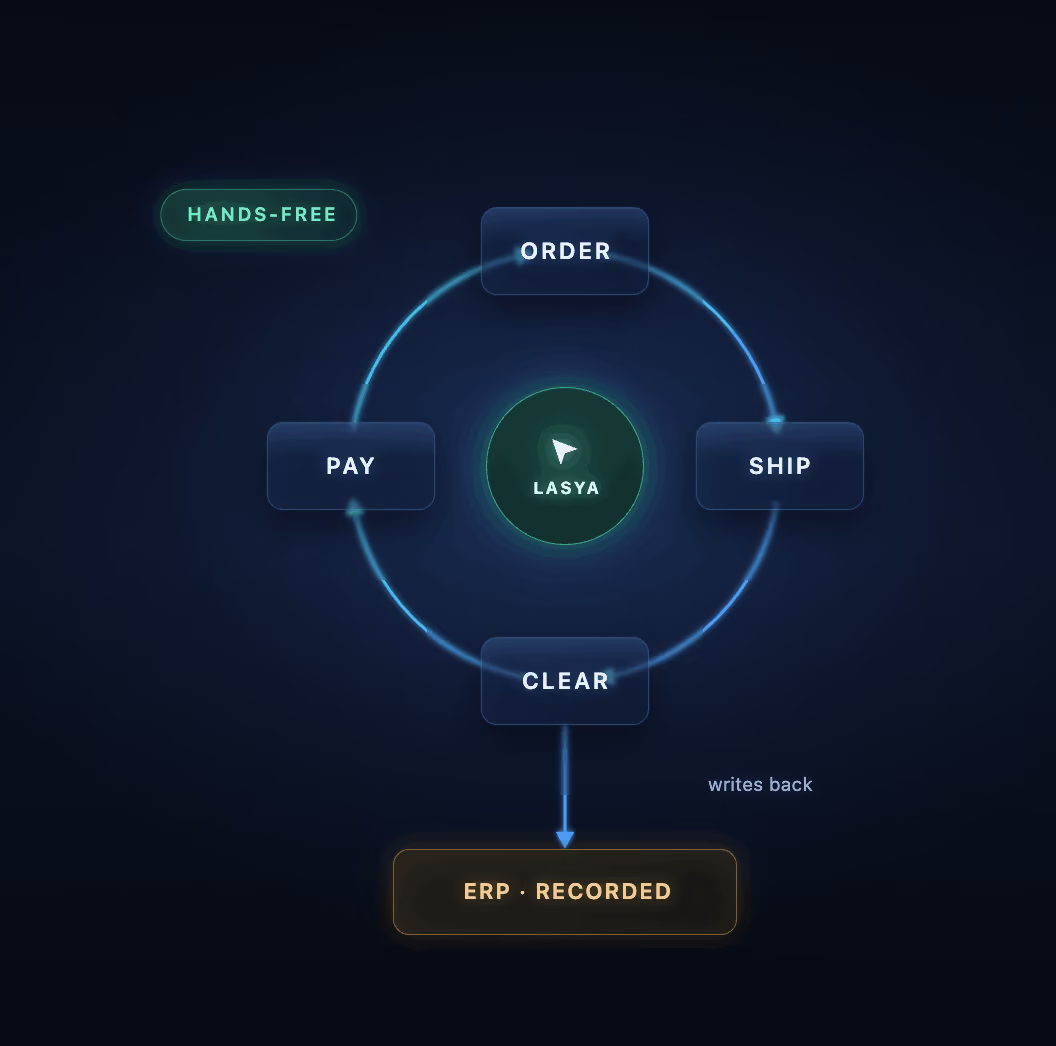

Autonomy is not “an AI agent did something.”
Autonomous Supply Chain Execution means the transaction can continue from state to state across systems, functions and enterprise boundaries with minimal human relay until the required business outcome is verified.
Rules execute a known task.
A predefined workflow removes a repeatable manual step, but usually depends on the happy path remaining intact.
An AI agent takes an action.
An agent may reason, communicate or act, but a successful action alone does not mean the transaction has completed.
The transaction keeps moving.
State, context, actions, exceptions and outcome verification remain connected until the required result is reached.
Sense → Decide → Act → Verify → Learn
Autonomy is a closed execution loop. Every action must be grounded in current transaction state and followed through to a verified business outcome.
Sense
Understand the current state across systems, messages, documents and partner responses.
Decide
Determine the next required action using policy, context and operational history.
Act
Execute through enterprise applications and existing partner channels.
Verify
Confirm that the intended business outcome actually occurred.
Learn
Write the execution and outcome into Operational Memory for future transactions.
Autonomy is proven by exception handling.
The happy path is the easy part. Autonomous execution becomes meaningful when the transaction can detect a deviation, understand its impact, recover under policy and escalate only when human authority is required.
Detect
A commitment or execution state deviates from plan.
Understand
Determine downstream operational and commercial impact.
Evaluate
Assess permitted recovery options and constraints.
Recover
Execute the approved response across systems and partners.
Escalate
Bring in a person only when policy or authority requires it.
Verify
Confirm the recovered outcome and update transaction state.
Autonomy is a progression, not a switch.
Enterprises do not move from manual work to full autonomy in one step. The execution layer progressively absorbs coordination as transaction state, policies and exception memory become reliable.
Observe
Understand state and surface what requires attention.
Recommend
Propose the next action while a human remains the execution authority.
Execute under policy
Carry eligible actions and recoveries without manual relay.
Autonomous transaction
Carry eligible transactions from intent to verified outcome with governed exceptions.
Three steps. No forms. No IT tickets.
Connect the execution context
Bring together the transaction state already spread across systems, documents and channels.
Run the work
Carry the next required actions across internal systems and external participants.
Write back the outcome
Verify completion and update the authoritative System of Record.
Coordinated by people vs carried by the execution layer.
The person carries the transaction.
PO sent → supplier chased → commitment copied → carrier briefed → changes relayed → invoice reconciled → ERP finally updated.
The transaction carries its own state.
Each outcome updates the shared execution state, determines what must happen next and continues across the next enterprise boundary.
Autonomy must survive every handoff.
Sourcing, procurement, supplier collaboration, logistics, EXIM and finance may run in different systems and companies. Autonomous execution cannot reset every time responsibility changes hands. The transaction state must continue across the journey.
ERP
Email / Portal
API
Portal
WMS
ERP
Autonomy Rate measures how much execution no longer needs human relay.
Dashboards measure visibility. An execution layer should be measured by the share of eligible transactions and governed exceptions completed end-to-end without human relay.
Eligible transactions completed
Measure end-to-end transaction completion, not the number of automated tasks.
Eligible exceptions resolved
Measure how often governed recovery succeeds without manual coordination.
↑ Quarter after quarter
The objective is progressive execution coverage—not a universal benchmark detached from process eligibility.
From fragmented work to autonomous execution.
Autonomous Supply Chain Execution, answered.
What is Autonomous Supply Chain Execution?
It is the outcome in which supply-chain transactions continue across systems, functions and enterprise boundaries with minimal human relay until the required business outcome is verified.
How is it different from workflow automation?
Workflow automation executes predefined tasks. Autonomous execution maintains transaction state, determines next actions, handles governed exceptions and verifies the outcome across boundaries.
Does autonomous execution replace ERP?
No. ERP remains the System of Record. The System of Execution carries the work between records and writes verified outcomes back to ERP.
How should autonomous execution be measured?
By execution completion: Autonomy Rate, exception autonomy, cycle time and manual touches across eligible transactions—not simply by the number of AI actions taken.
Start with one transaction that should run itself.
Choose one execution corridor. Connect the existing systems and partner channels. Measure how much of the transaction can complete without human relay.
Start One Execution →