
The system where your supply chain execution actually happens.
Lasya AI is Settyl’s System of Execution for supply chains. It carries one transaction across procurement, logistics, EXIM, finance, enterprise systems and external partners — from business intent to verified outcome.
Your systems record the transaction. People still carry it between them.
ERP, planning, TMS, WMS and finance systems each own part of the record. The handoffs between them still move through people, inboxes, calls, spreadsheets and partner channels.
AI inside every application does not create an autonomous supply chain.
Procurement software can become agentic. A TMS can become agentic. Finance software can become agentic. If each one still owns only its functional part of the work, the transaction remains fragmented at every boundary.
Lasya follows the transaction — not the application.
One transaction state across every execution domain.
The same execution memory carries intent, supplier response, approvals, shipment evidence, financial exceptions and ERP dependencies across the transaction.
Three breaks. Three fixes. One execution layer.
Sourcing → Procurement
Commercial context often collapses into a PO record. Lasya carries sourcing decisions, commitments and approvals into execution.
Procurement → Logistics
The PO exists, but shipment execution starts elsewhere. Lasya carries supplier commitment into booking, movement and exception handling.
Logistics → Finance
Finance should not reconstruct what operations already knows. Lasya carries execution evidence into matching and settlement.
Sense → Decide → Act → Verify → Learn
Understand the current transaction state across systems, messages and documents.
Determine the next action using policy, context and prior execution history.
Execute through applications, APIs and partner communication channels.
Confirm that the required business outcome actually occurred.
Write the execution, recovery and outcome into Operational Memory.
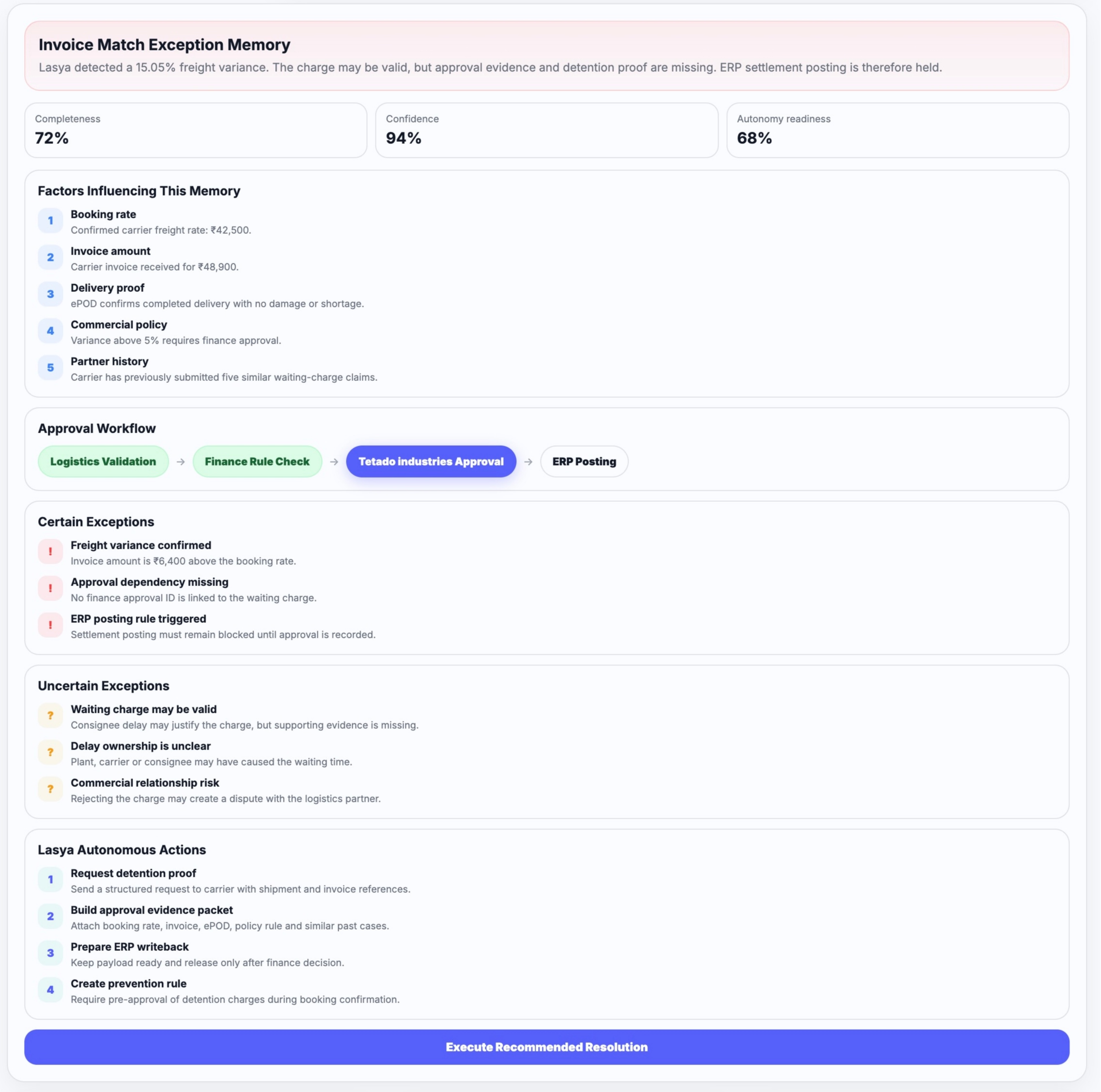
Lasya doesn't just identify the exception. It carries the resolution.
Evidence, certainty, business impact, approval dependencies and autonomous actions remain attached to the same transaction until the outcome is verified
One System of Execution. Three transaction domains.
Sourcing & Procurement
From purchase intent to supplier commitment.
Supplier discovery · RFQ · negotiation · approvals · PO execution · acknowledgement
Explore Sourcing & Procurement →Freight, Logistics & EXIM
From supplier commitment to verified delivery.
Booking · dispatch · movement · customs · exceptions · receipt · ePOD
Explore Freight & Logistics →Finance Operations
From execution evidence to financial closure.
Invoice ingestion · matching · freight audit · claims · accruals · posting · cash
Explore Finance Operations →Autonomy is proven when the plan breaks.
Shared execution without shared software.
The transaction continues when responsibility moves outside your enterprise. Lasya preserves context and state across companies without requiring every participant to adopt one application.
ERP
API
Portal
WMS
ERP
No new portal for your partners.
Every completed transaction leaves operational memory behind.
Supplier Memory
Commitments, response patterns, pricing, quality and negotiation outcomes.
Logistics Memory
Lane performance, carrier behavior, transit deviations and recovery outcomes.
Exception Memory
Root causes, approved recovery actions, escalation decisions and effectiveness.
Transaction Memory
Context, decisions, actions, documents, approvals and verified outcomes.
Memory becomes execution readiness.
Lasya measures how complete the transaction memory is, what approvals remain and whether the transaction is ready to progress autonomously.

ERP keeps the record. Lasya owns the work between records.
ERP
Master data · PO record · shipment record · invoice record · accounting · historical truth
Lasya AI
Transaction context · follow-through · movement execution · exception recovery · next action · verified outcome
Where Lasya fits.
AI Supply Chain Operating System is the metaphor for understanding the complete execution environment.
Frequently asked questions.
What is Lasya AI?
Lasya AI is a System of Execution for supply chains. It carries transactions across systems, functions and enterprise boundaries from intent to verified outcome while ERP remains the System of Record.
How is Lasya different from a copilot or standalone AI agent?
A copilot recommends. A standalone agent can perform an individual task. Lasya is the System of Execution: specialized agents work against one shared transaction state while Lasya carries context, ownership, policy, exceptions and evidence across applications, enterprises and communication channels from intent to verified outcome.
Do suppliers and carriers need to adopt Lasya?
No. They can continue using email, WhatsApp, EDI, APIs, documents and existing portals while Lasya maintains the execution state.
Does Lasya replace ERP?
No. ERP remains authoritative for master, transactional and financial records. Lasya executes the work between those records and returns verified outcomes.
What is Operational Memory?
It is persistent execution context built from commitments, decisions, actions, exceptions, recoveries and outcomes across completed transactions.
How does Lasya handle exceptions?
Lasya can detect exceptions, assess impact and execute permitted recovery within policy. Decisions outside approved authority are escalated to the appropriate human owner.
Start with one transaction that should not require human relay.
Choose one execution chain. Connect the systems and participants already involved. Measure how much of the transaction Lasya can carry from intent to verified outcome.
Start One Execution →