
SUPPLY CHAIN EXECUTION INSIGHTS
Ideas for the work that happens between systems and enterprises.
Short, practical perspectives on operational fragmentation, multi-enterprise execution, autonomous supply chain execution, operational memory and the System of Execution - a knowledge layer between social posts and long-form research. Every term is defined in the glossary.
12 insights
 System of Execution01
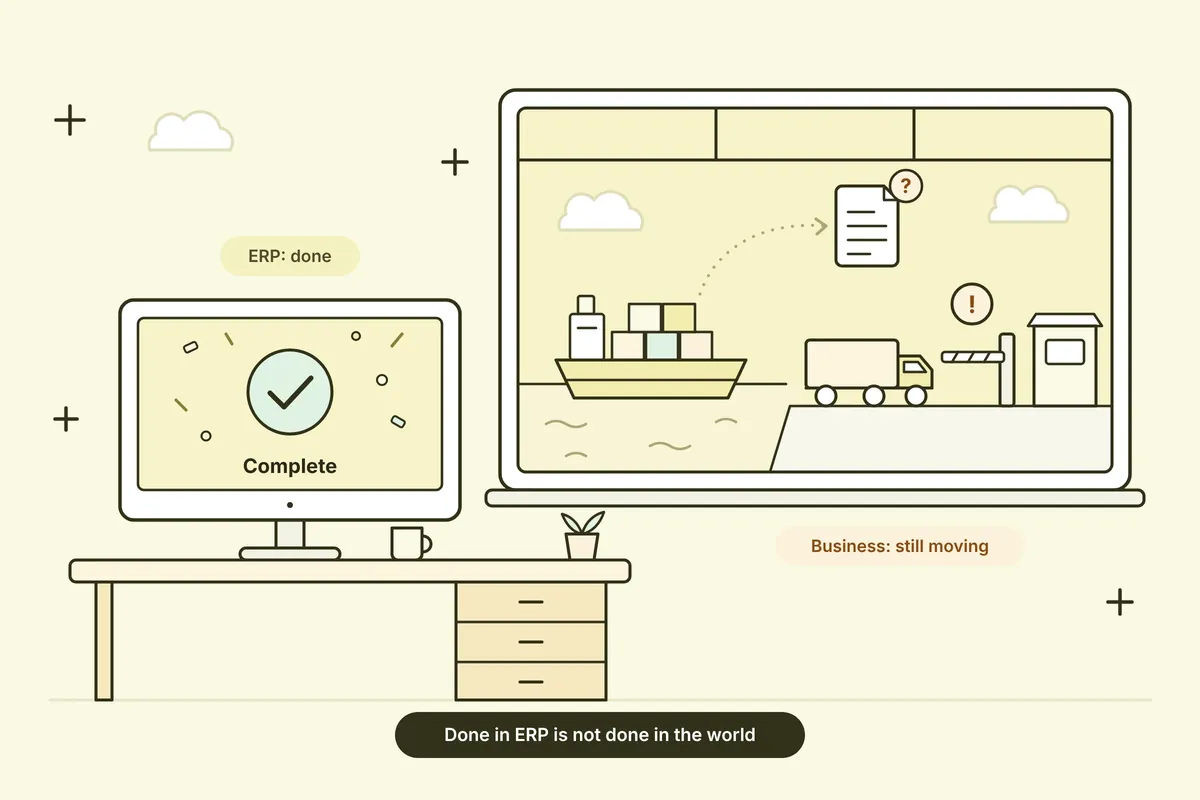
Your ERP Transaction Is Complete. Your Business Transaction Isn’t.
An ERP record can close while the business transaction stays open - execution ends only when the outcome is verified.Read insight →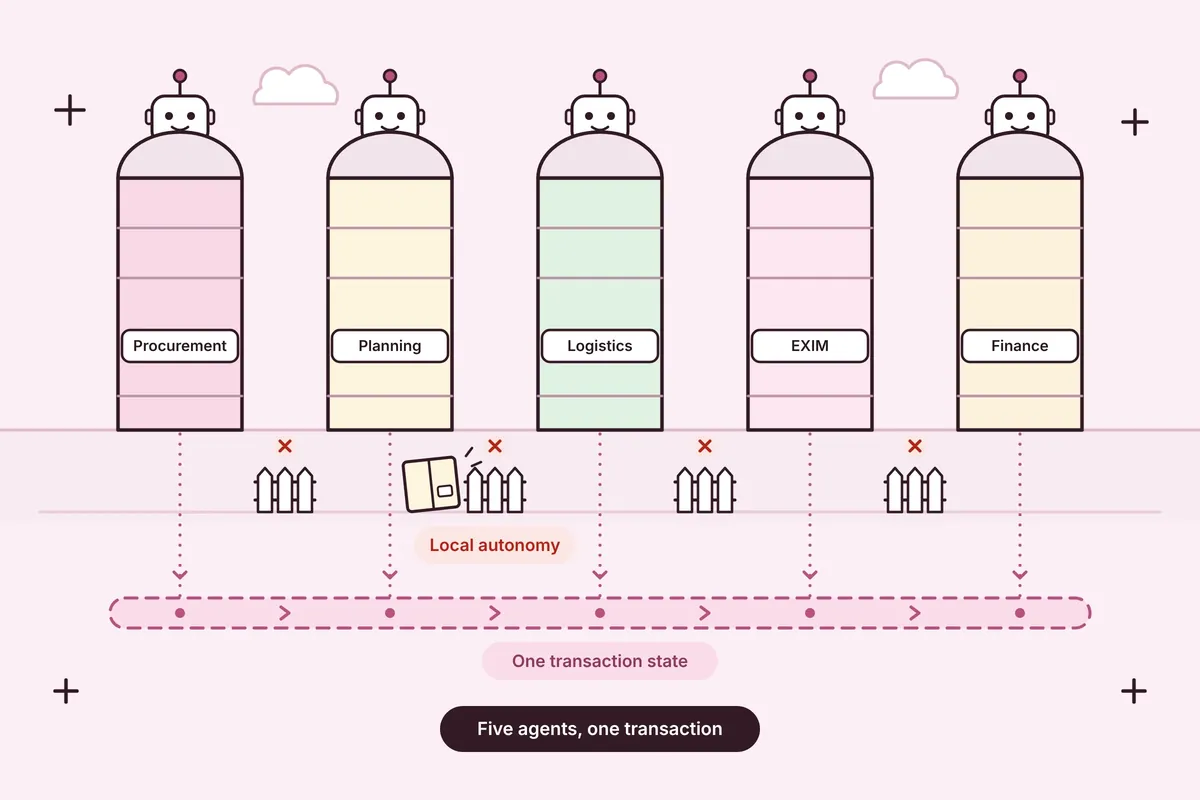 Operational Fragmentation02
Five Internal AI Agents Can Become Five New Operational Silos
Agents for procurement, planning, logistics, EXIM and finance can each succeed locally while people still carry context between them.Read insight →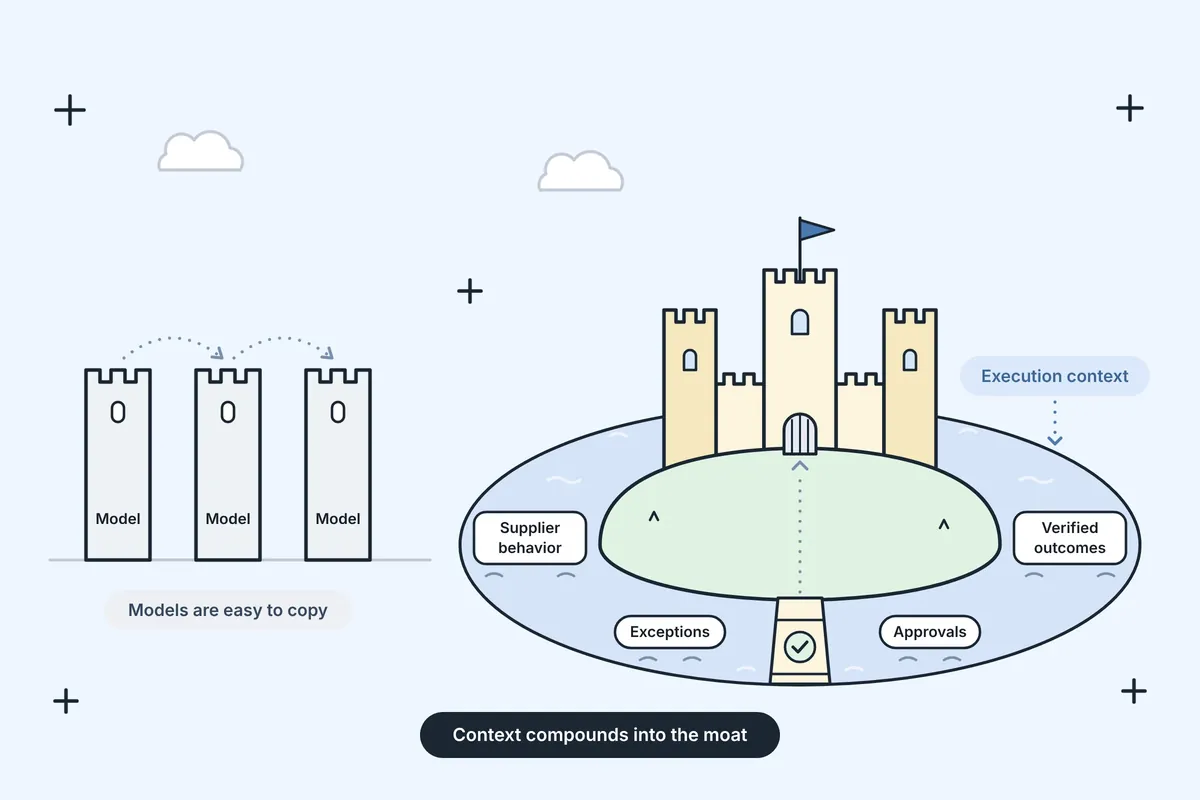 System of Execution03
The Model Is Not the Moat. Execution Context Is.
Models are easy to swap. The hard-to-copy asset is governed context built from real transactions, exceptions and verified outcomes.Read insight →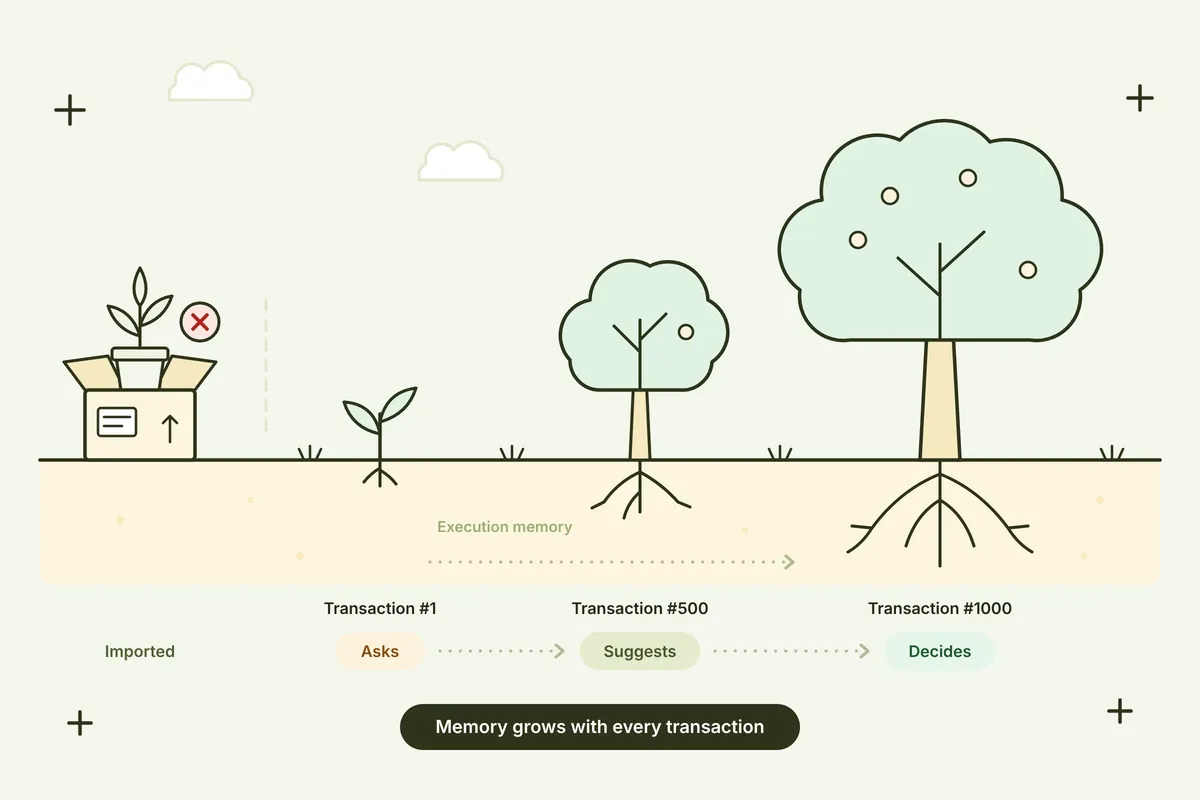 System of Execution04
Operational Memory Is Earned, Not Imported
Operational memory grows from governed actions, collected evidence and verified results - not imported documents or emails.Read insight →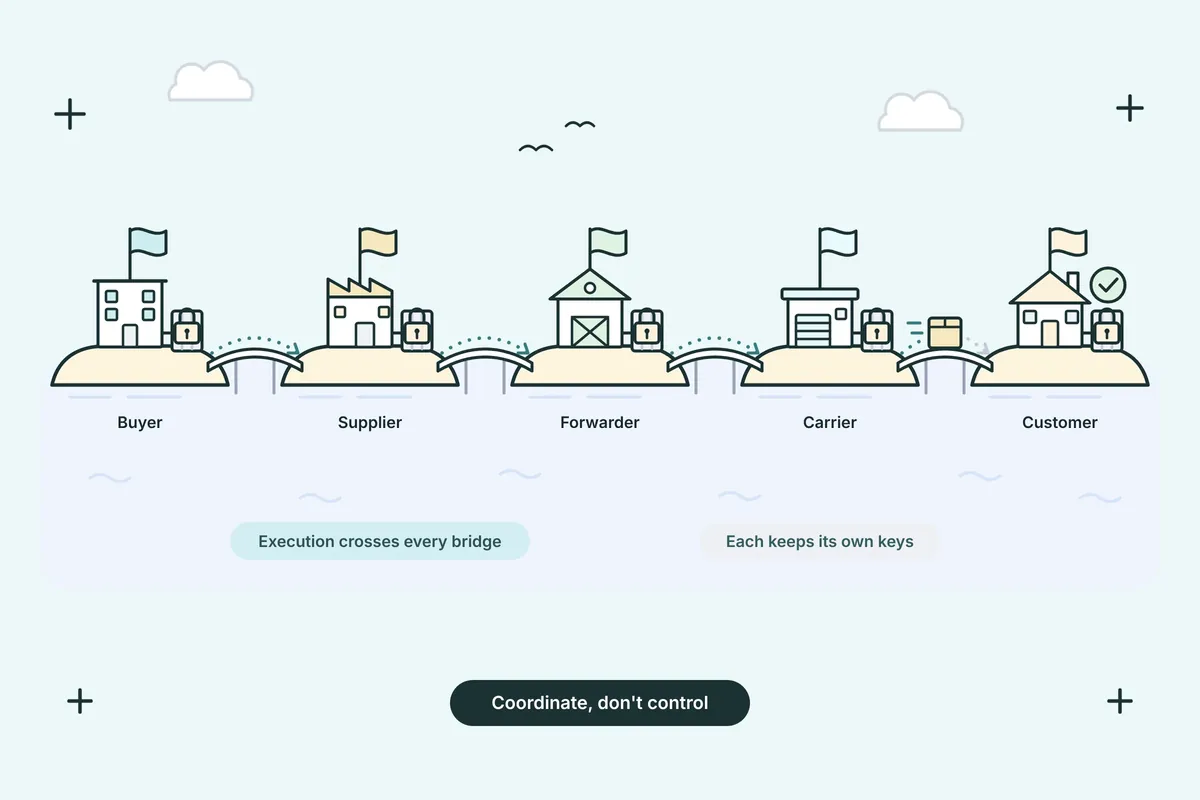 Multi-Enterprise Execution05
Cross-Enterprise Execution Without Cross-Enterprise Control
A transaction can span partners without one company gaining authority over another - continuity and decision rights are separate.Read insight →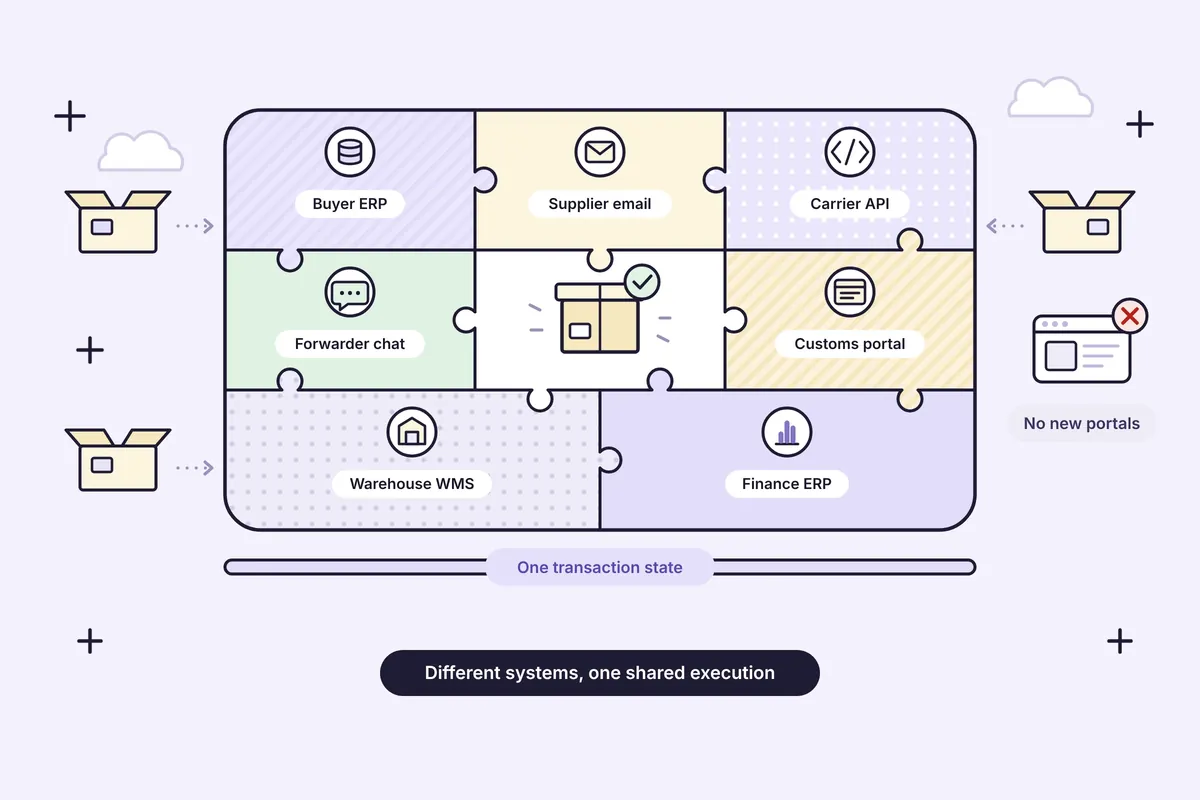 Multi-Enterprise Execution06
Shared Execution Without Shared Software
Autonomy shouldn’t require every partner to adopt the same portal - one transaction state must persist across their channels.Read insight →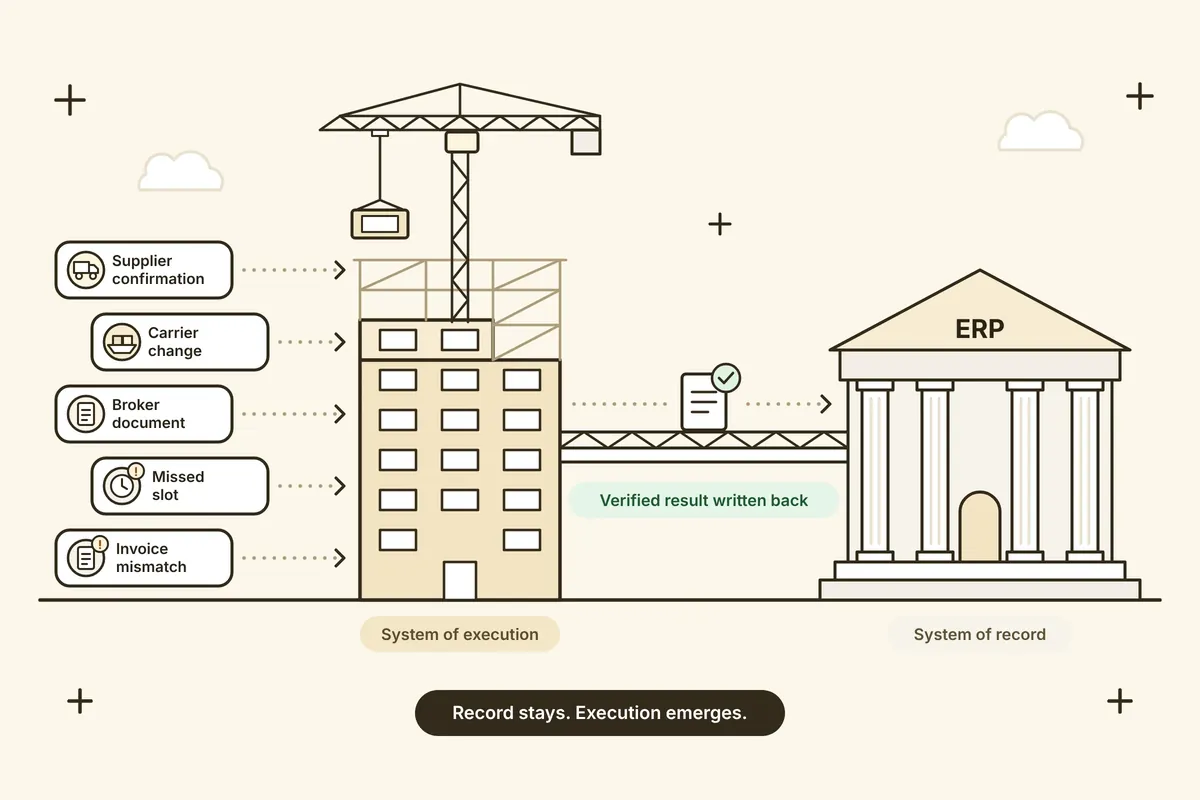 System of Execution07
ERP Isn’t Going Away. A System of Execution Is Emerging
ERP’s durability leaves room for a complementary layer that handles the work between records and returns verified outcomes.Read insight →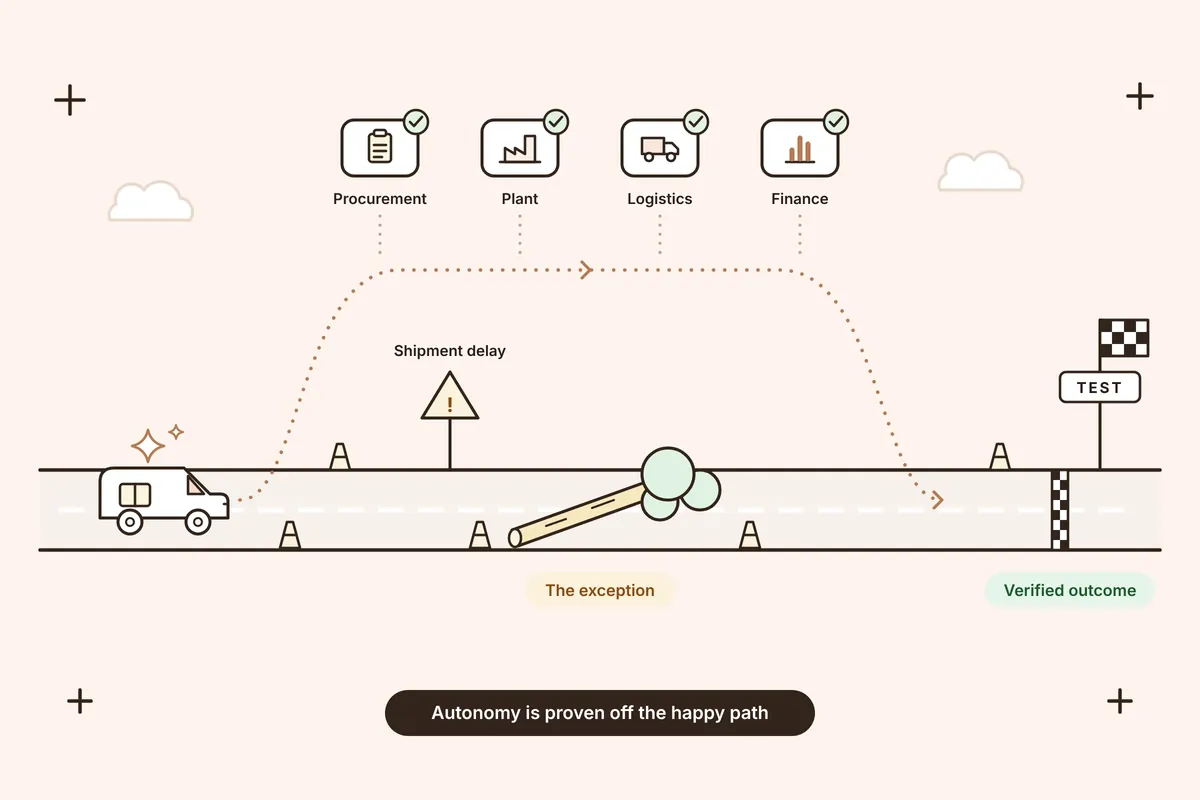 Autonomous Execution08
The Exception Is the Real Test of Autonomy
Happy-path automation isn’t enough - autonomy is proven when disruptions need cross-system recovery to a verified outcome.Read insight →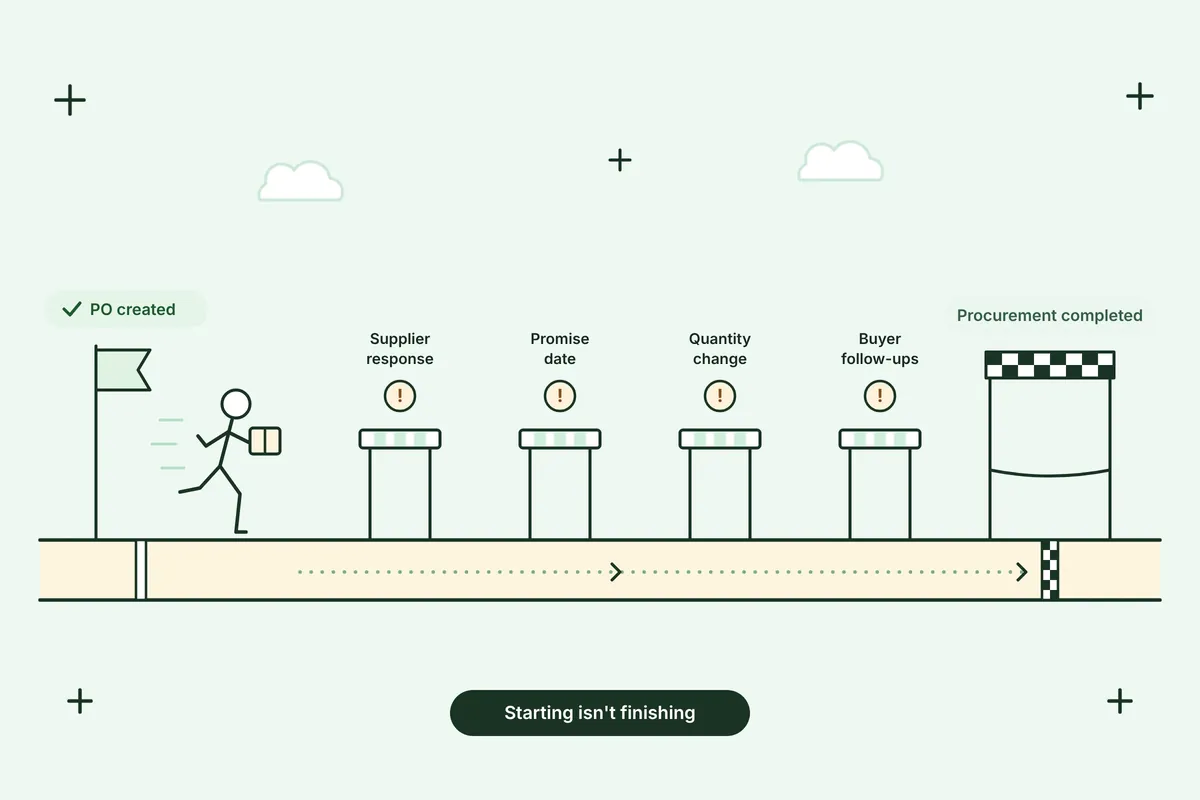 Operational Fragmentation09
PO Created Is Not Procurement Completed
Creating a PO doesn’t finish procurement - completion needs verified supplier commitment on price, quantity, date and terms.Read insight →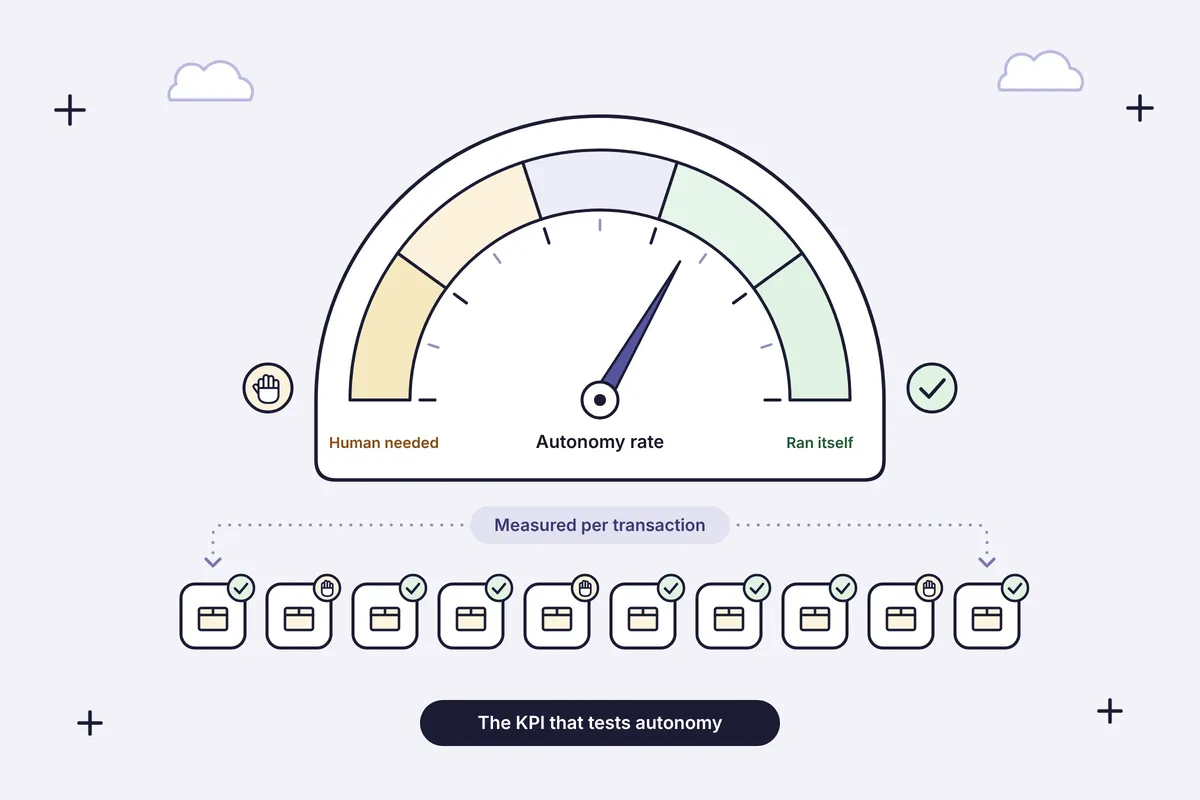 Autonomous Execution10
Autonomy Rate: The KPI That Tests Transaction Autonomy
The share of eligible transactions that reach a verified outcome without human relay - completion, not AI activity.Read insight →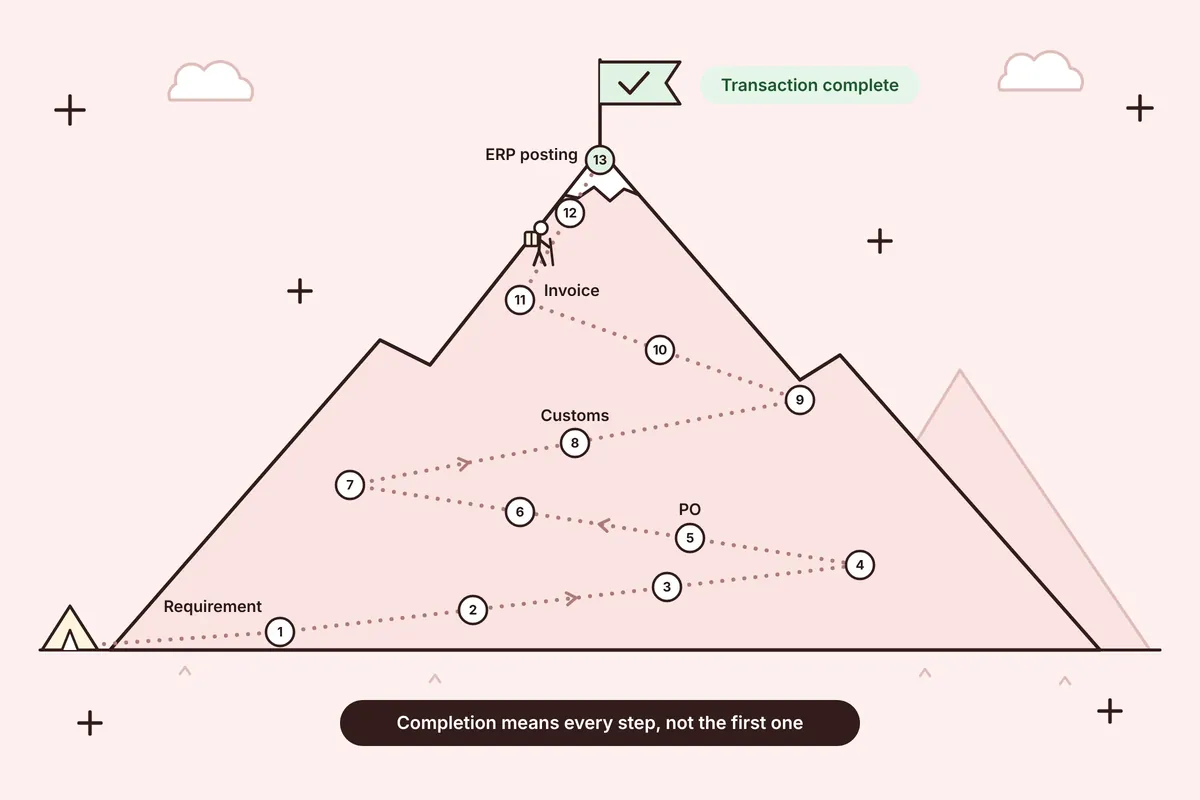 Autonomous Execution11
Supply Chain Transaction Completion
A system can finish its own task while the transaction stays incomplete - completion means a verified outcome across systems.Read insight →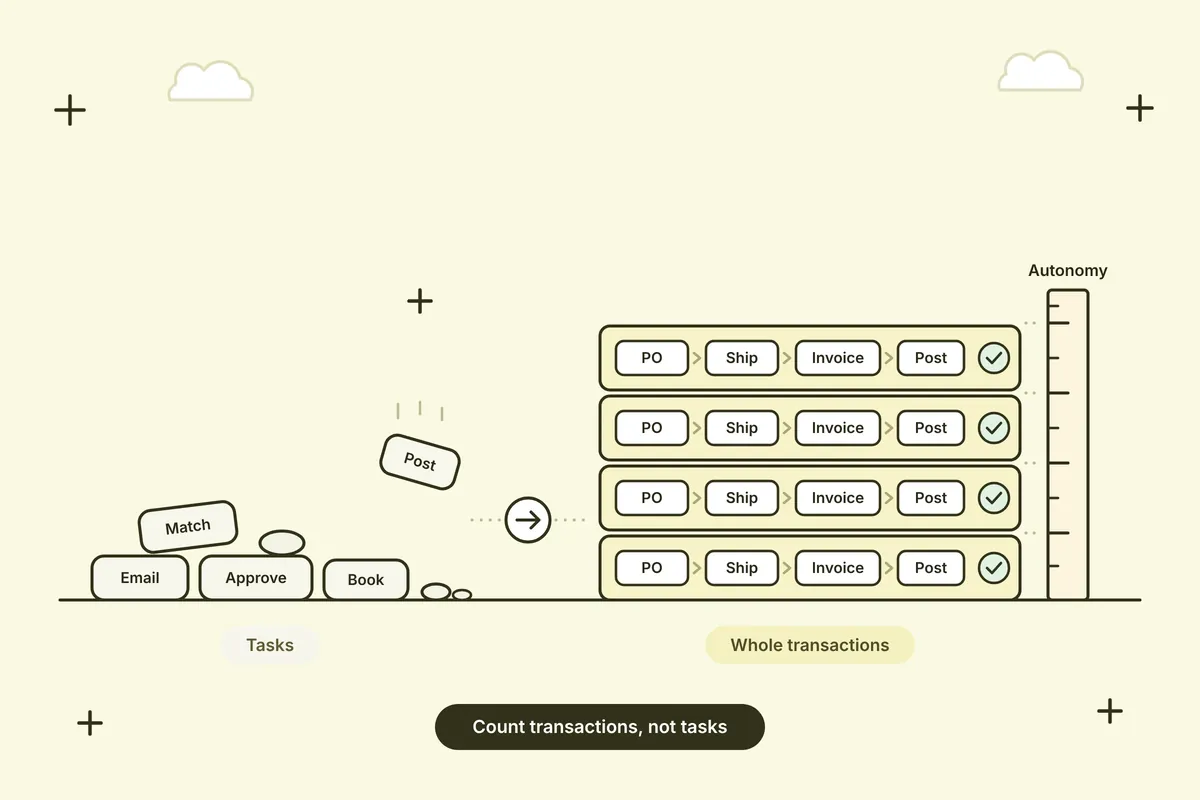 Autonomous Execution12
The Transaction Is the Unit of Autonomy
Agents can automate steps while people coordinate the whole - durable autonomy needs one execution state across enterprises.Read insight →