
The Exception Is the Real Test of Autonomy
Happy-path automation proves that software can perform a planned sequence. Exception autonomy asks the harder question: when reality changes, can the same transaction coordinate the recovery across systems, functions and enterprises until a verified outcome is restored?
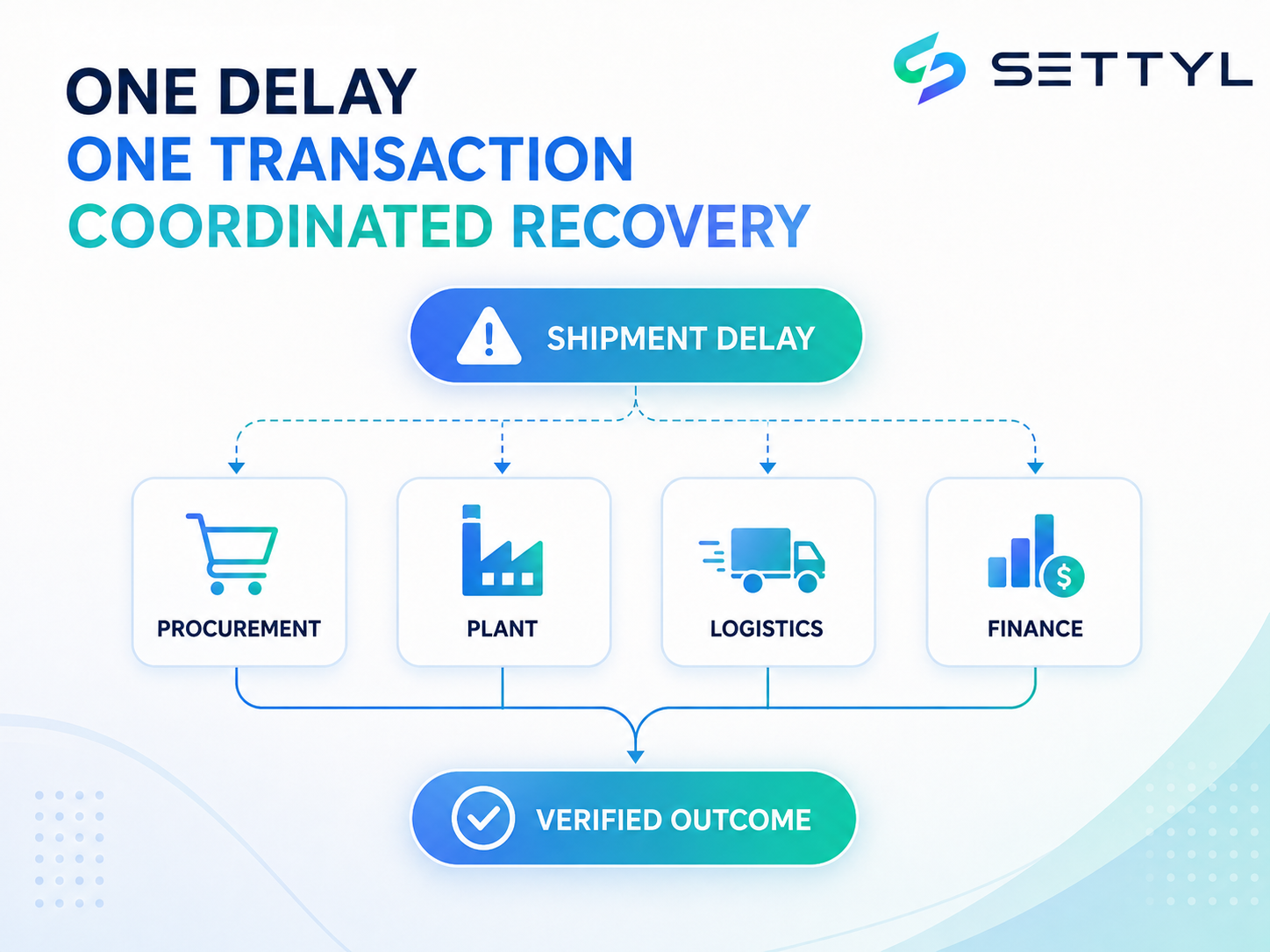
THE THESIS
The strongest proof of autonomous supply-chain execution is not whether AI can run the happy path, but whether the transaction continues through an exception without humans becoming the coordination layer.
THE BRIEF
Most automation looks autonomous until the first exception arrives.
A supplier changes a promise date. A truck misses the pickup slot. Customs rejects a document. An invoice no longer matches the contracted rate. The expected sequence breaks—and the transaction suddenly crosses more teams, more systems and more enterprise boundaries than the original workflow anticipated.
That is where the real autonomy test begins.
Detecting an exception is not resolving it
Enterprise systems have become increasingly good at spotting anomalies. They can flag a late shipment, identify a quantity mismatch, classify an invoice discrepancy or predict that an order may miss its required date.
But an alert is not an outcome.
If a planner still has to read the alert, call the supplier, ask logistics for options, update a spreadsheet, obtain an approval, amend ERP and tell finance what changed, then AI improved detection while the human remained the execution layer.
One exception can change the state of the entire transaction
Take a supplier delay. What looks like a procurement exception can immediately affect production availability, transport planning, inventory cover, customer commitment, freight cost and eventually the invoice.
Resolving it therefore requires more than a procurement agent making a local decision. The transaction must preserve what changed, understand the downstream impact, coordinate the required actions across the relevant parties and confirm that the recovery actually happened.
A useful exception lifecycle is:
Detect → Interpret → Assess impact → Coordinate recovery → Verify outcome → Record evidence.
The system should not declare success when an action is initiated. A carrier option being requested is not capacity secured. A revised supplier date being received is not an approved recovery plan. An amended document being sent is not acceptance.
Completion has to be verified.
Exception autonomy is the difference between automated islands and a System of Execution
This is why the Autonomy Rate becomes more revealing when organizations include eligible exceptions in the denominator. Happy-path transactions will naturally produce the highest autonomy. Exceptions expose whether context and responsibility can travel across systems and companies without manual relay.
A System of Execution should carry that state until the business outcome is restored, while ERP remains the System of Record for the verified result.
Supply-chain autonomy should therefore be judged where the workflow becomes uncertain—not where everything went according to plan.
WHY IT MATTERS
Exceptions are where manual coordination, context loss and cross-functional handoffs reappear; resolving them autonomously is a stronger test than automating routine steps.
KEY TAKEAWAY
Happy-path automation shows that software can follow a sequence. Exception autonomy shows whether the transaction can recover when the sequence breaks.
From fragmented work to verified execution
Lasya AI is the System of Execution for supply chains. ERP remains the System of Record; Lasya carries transaction work across systems, partners, channels and exceptions to a verified outcome.