
Supply Chain Transaction Completion
A system can finish its task while the supply-chain transaction remains incomplete. Completion requires the transaction to continue across systems and enterprises until the intended business outcome is verified.
THE THESIS
Supply-chain automation should be measured by transaction completion—not by whether each application finished its local task.
THE BRIEF
Your AI can act. But where does it stop?
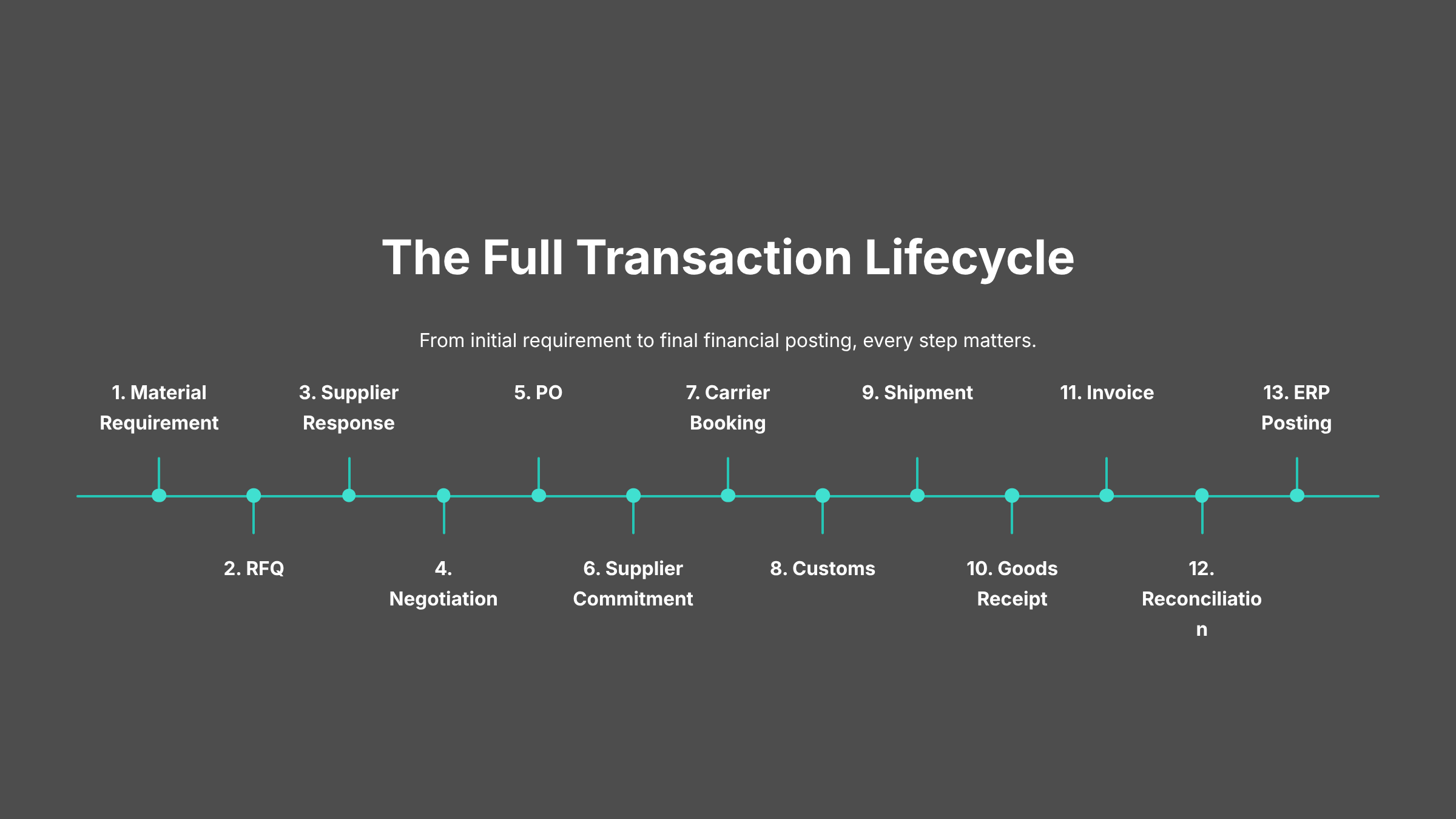
Procurement AI can issue an RFQ.A supplier agent can respond.Logistics AI can arrange a shipment. Finance AI can process an invoice.
Each system may complete its task -but the transaction can still be incomplete.
Because real supply-chain transactions don't stay inside one application—or even one enterprise -They cross suppliers, procurement teams, carriers, logistics partners, finance systems and ERPs.
Wherever one system's ownership ends, human work usually begins -that's the autonomy gap.
The harder question for enterprise AI isn't:“What can your agent do? ”It's:“Where does your agent stop owning the transaction?”
The next step is Multi-Enterprise Execution—carrying one transaction across systems and companies until the intended business outcome is actually achieved
WHY IT MATTERS
When ownership ends at application boundaries, people become the execution layer that carries context and responsibility between systems and companies.
KEY TAKEAWAY
A completed system task is not a completed supply-chain transaction. The transaction must continue until the business outcome is verified.
From fragmented work to verified execution
Lasya AI is the System of Execution for supply chains. ERP remains the System of Record; Lasya carries transaction work across systems, partners, channels and exceptions to a verified outcome.