Supply Chain Trends 2026: From Visibility to a System of Execution
Trends point from visibility toward transaction execution across enterprises.

For years, supply-chain transformation focused on seeing more.
Track the shipment. Monitor the supplier. Surface the exception. Build the control tower. Add another dashboard.
That solved an important problem. But it exposed the next one.
Knowing what happened does not complete the transaction.
A delayed shipment still triggers emails. A supplier commitment still has to be chased. A customs exception still moves between broker, logistics, procurement and finance. An invoice mismatch still requires someone to reconstruct what happened.
The defining shift in 2026 is therefore not simply from dashboards to AI.
It is from visibility to execution - and from autonomous tasks to systems capable of carrying a transaction across functions, enterprises, systems and channels.
That is the architectural gap a System of Execution is designed to fill.
Trend 1: Visibility Becomes the Signal, Not the Outcome
Visibility answers: What is happening?
Execution answers: What should happen next, who or what should act, and has the outcome actually been completed?
A shipment-delay alert is valuable. But the business outcome may require a carrier response, supplier confirmation, revised production plan, customs-document change, approval for expedite cost, customer notification and ERP update.
If people still carry that context across systems, the enterprise has visibility but not autonomous execution.
This is the distinction behind Autonomous Supply Chain Execution: software progressively owns more of the transaction journey, not merely more of the analysis.
Trend 2: Operational Fragmentation Becomes the AI-Era Problem
Enterprises already have ERP, planning systems, sourcing applications, TMS platforms, visibility tools, finance applications, portals and communication channels.
The persistent problem is the work between them.
That work includes copying context, following up, reconciling conflicting states, chasing approvals, interpreting exceptions and deciding which participant needs to act next.
Settyl describes this as Operational Fragmentation.
Its accumulated cost is the Execution Fragmentation Tax™: thousands of small coordination activities that rarely appear as one line item but consume operational capacity across transactions.
AI inside individual tools can reduce local effort. It does not automatically remove the tax at the boundaries.
Trend 3: The Transaction Becomes the Unit of Autonomy
The first wave of enterprise AI focused on tasks: extract this document, summarize this email, predict this delay, recommend this supplier, match this invoice.
Those capabilities matter. But a supply-chain transaction is larger than any one task.
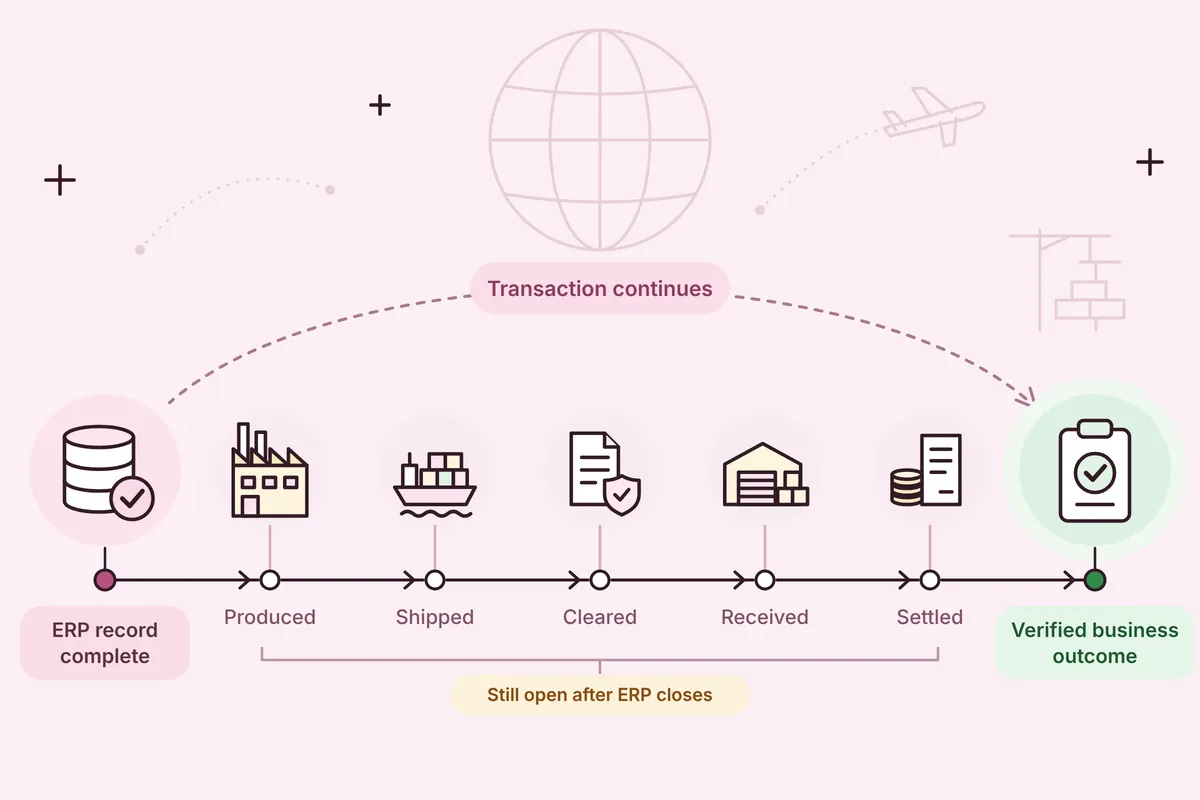
A purchase order can cross supplier communication, production readiness, freight booking, documentation, customs, receipt, invoice reconciliation and settlement.
The transaction is therefore the more useful unit of autonomy.
The key question becomes: what percentage of eligible transactions or exceptions reach a verified outcome without manual coordination, within defined governance boundaries?
That is a more rigorous interpretation of Autonomy Rate than counting AI-generated recommendations or isolated automated tasks.
Trend 4: Agentic AI Becomes a Worker, Not the Architecture
Agentic AI is an important execution mechanism. Specialized agents can reason about procurement, logistics, EXIM, finance, documents or compliance.
But connecting agents does not automatically create end-to-end ownership.
If one agent owns one state, passes partial context to another agent, and no shared layer owns the transaction, AI can reproduce the fragmentation already present between enterprise applications.
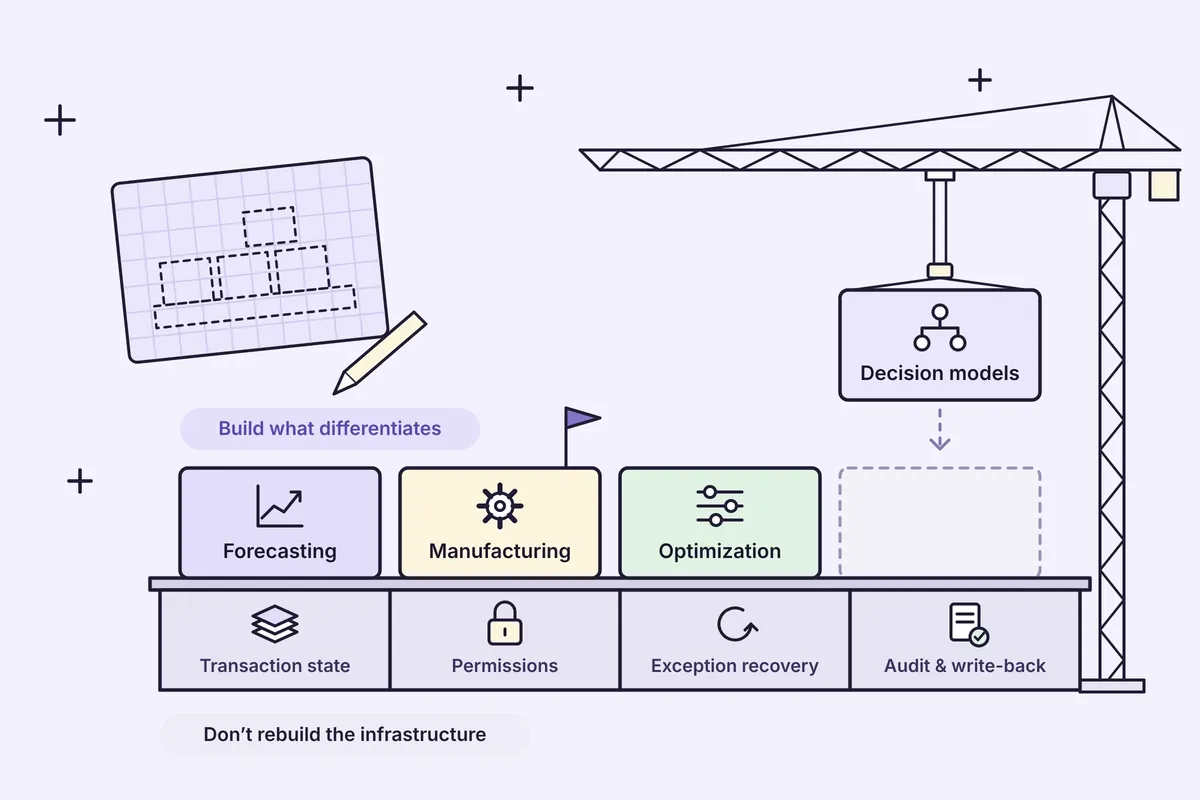
The agent is a worker. The System of Execution owns the transaction.
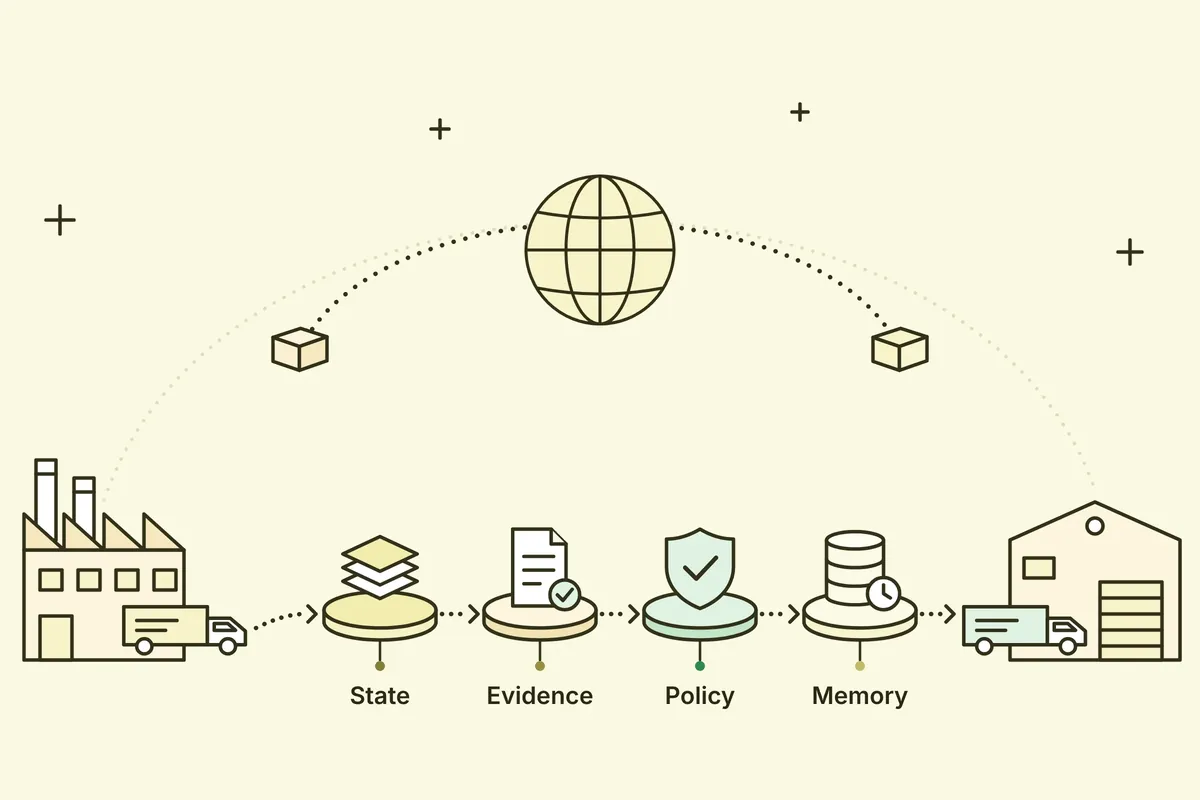
The execution architecture must retain transaction state, policy, approvals, evidence, exceptions and outcome ownership while agents perform bounded work inside it.
Trend 5: Multi-Enterprise Execution Becomes the Real Test
Supply chains do not stop at the enterprise boundary.
A transaction crosses suppliers, carriers, freight forwarders, customs brokers, warehouses, contract manufacturers, distributors and customers. Each participant can use different systems and different ways of working.
Fragmentation itself will not disappear. Different enterprises will continue to use different ERPs, portals, channels and processes.
The architectural challenge is to stop requiring people to act as the integration layer across that fragmentation.
Multi-Enterprise Execution is the framework for carrying the transaction across those boundaries.
Critically, this cannot depend on every external participant adopting one new portal. Execution must work across the channels partners already use - email, messaging, portals, EDI and partner systems.
Trend 6: Point AI Gives Way to Transaction Execution
Point AI can improve sourcing, freight, invoice processing, document extraction or forecasting. The problem begins when enterprises mistake a collection of intelligent tools for one autonomous operating model.
A faster silo is still a silo if people must connect it to the next one.
The future architecture is not ERP replacement. ERP remains the System of Record.
The missing layer is the System of Execution: the system responsible for the work and transaction state between records.
For a deeper comparison, see System of Record vs. System of Execution in Supply Chain.
Trend 7: Operational Memory Becomes a Compounding Advantage
The transaction record tells you what was posted. Execution evidence tells you how the outcome was reached.
Why did the supplier miss the date? Which recovery option was rejected? Who approved the deviation? What did the carrier commit to? Which document blocked clearance? What finally resolved the exception?
When signals, decisions, actions, exceptions, approvals, partner commitments and verified outcomes persist across transactions, they become operational and transaction memory.
The compounding loop is:
Transaction → Execution Evidence → Operational Memory → Better Future Execution
This matters because safer autonomy should not come from simply trusting an LLM more. It should come from governed knowledge built from verified execution history.
Where the AI Supply Chain Operating System Fits
AI Supply Chain Operating System remains a useful metaphor for an environment broad enough to run supply-chain work.
But it should not compete with the architectural category.
The hierarchy is clearer:
Operational Fragmentation = the problem.
System of Execution = the architectural category.
Multi-Enterprise Execution = the framework.
Autonomous Supply Chain Execution = the domain and outcome.
AI Supply Chain Operating System = the metaphor.
This prevents the narrative from turning agents, orchestration or operating-system language into competing categories.
What Operations Leaders Should Measure in 2026
Do not measure AI maturity by the number of copilots, agents or dashboards deployed.
Select one high-friction transaction and measure how much coordination it requires.
- How many manual handoffs occur?
- How many systems and channels carry transaction context?
- How many external participants must be chased?
- How many exceptions require manual interpretation?
- How long does the transaction wait between actions?
- What share of eligible execution reaches verified outcome autonomously?
That exposes the Execution Fragmentation Tax™ and gives Autonomy Rate an operational denominator.
The 2030 Question
The useful 2030 question is not whether the supply chain will be “fully autonomous.” That is too broad and ignores governance, judgment and enterprise boundaries.
A better question is:
How much eligible operational work can a System of Execution carry from intent to verified outcome without requiring a person to connect the systems and enterprises?
ERP will continue to keep authoritative records. Specialized applications will continue to exist. External partners will continue to use different systems.
The structural advantage will come from removing the human coordination layer between them.
That is the shift 2026 is beginning to make visible.
Frequently Asked Questions
What are the biggest supply chain trends in 2026?
The most important shifts are from visibility to execution, from task automation to transaction autonomy, from isolated agents to a System of Execution, from internal automation to Multi-Enterprise Execution, and from ephemeral AI context to operational memory.
What is a System of Execution?
A System of Execution owns the transaction journey from intent to verified outcome across functions, systems, enterprises and channels while ERP remains the System of Record.
Does a System of Execution replace ERP?
No. ERP retains authoritative records. The execution layer owns the operational work and transaction state around and between those records.
What role does agentic AI play?
Agents perform specialized bounded work. The System of Execution retains shared transaction context, governance and outcome ownership.
Why does Multi-Enterprise Execution matter?
Because supply-chain transactions cross independent enterprises that will continue using different systems and channels. Execution must cross those boundaries without requiring universal portal adoption.